Skip to content
ScienceBlog.com
  • Featured Blogs
    • EU Horizon Blog
    • ESA Tracker
    • Experimental Frontiers
    • Josh Mitteldorf’s Aging Matters
    • Dr. Lu Zhang’s Gondwanaland
    • NeuroEdge
    • NIAAA
    • SciChi
    • The Poetry of Science
    • Wild Science
  • Topics
    • Brain & Behavior
    • Earth, Energy & Environment
    • Health
    • Life & Non-humans
    • Physics & Mathematics
    • Social Sciences
    • Space
    • Technology
  • Our Substack
  • Follow Us!
    • Bluesky
    • Threads
    • FaceBook
    • Google News
    • Twitter/X
  • Contribute/Contact

Stanford University

illustration of energy efficient town

Clean Energy Transition Could Boost National Security For Most Countries

alzheimers illustration

Study strengthens link between shingles vaccine and lower dementia risk

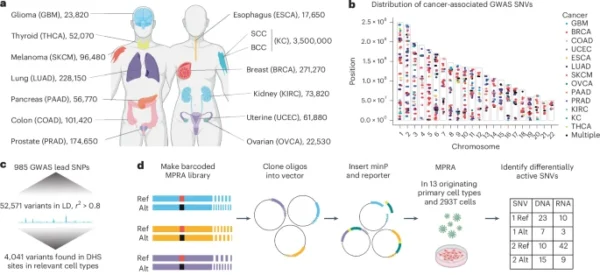
genetic cancer infographic

Stanford Scientists Map the ‘DNA Switch Panel’ Behind Cancer Risk

Healthy foods high in fiber

Dietary Fiber’s Anti-Cancer Effects Traced to Direct Genetic Changes

Brain illustration

Brain’s Gas and Brake Pedals: How Dopamine and Serotonin Dance Together to Shape Learning

Is it possible to close the texture gap between plant-based meat and animal meat? Ellen Kuhl and her lab are trying. From left: Skyler St. Pierre, Marc Levenston, Ellen Kuhl, Reese Dunne, Ethan Darwin, Valerie Perez Medina, and Divya Adil pose with the meat and plant-based meat they analyzed.

Bridging the Texture Gap: AI and Engineering Drive Plant-Based Meat Innovation

A new AI program, SEQUOIA, can analyze a microscopy image from a tumor biopsy (left, purple) and rapidly determine what genes are likely turned on and off in the cells it contains (gene expression shown in shades of red and blue on right).

AI System Predicts Cancer Gene Activity From Biopsy Images Alone

Schematic of gravity machine - a rotating microscope that enables virtual reality arena for plankton and marine snow. The tool enables an infinite field of view microscope in the Z-axis, enabling observation of a sedimenting particle over long periods of time.

Hidden Biological Processes Reshape Our Understanding of Ocean Carbon Storage

A review of research of over a hundred geographical sites worldwide, outlining every continental landmass, has revealed a globally extensive gap in the geologic record. | Bernd Dittrich/Unsplash

Stanford Review Reveals Geological Mystery: Where Did the Sediment Go During the Eocene-Oligocene Transition?

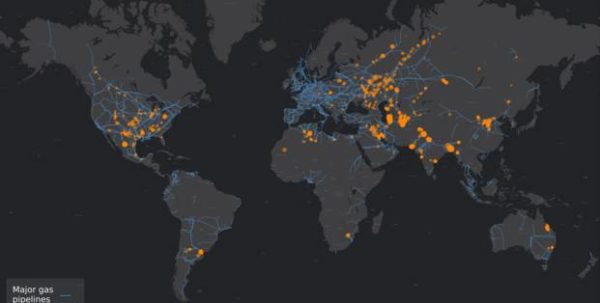
Map of main gas pipelines and sources of methane emissions related to oil and gas industry operations.

Methane emissions are rising faster than ever

Brain, magnifying glass illustration

Drugs that improve brain metabolism could help Alzheimer’s patients

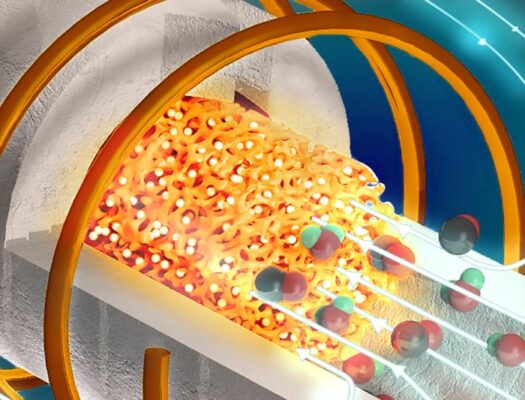
This image depicts the inductively heated metamaterial reactor with catalysts filling the ceramic foam baffle. It is producing carbon monoxide and water from the reverse water gas shift reaction. | Dolly Mantle

Revolutionary Electric Reactor Could Slash Industrial Carbon Emissions

Man in his 50s with hands up

Stanford Study Reveals Major Molecular Shifts in Our 40s and 60s

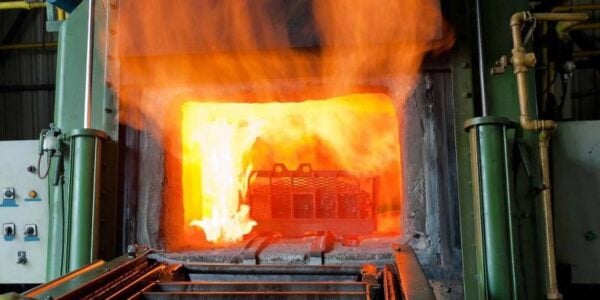
Production of glass, iron, steel, and cement requires high-temperature heat. (Image credit: Getty Images)

Ancient Heating Tech Could Upend Clean Energy Storage

Older posts
Newer posts
← Previous Page1 Page2 Page3 … Page29 Next →
Substack subscription form sign up

Comments

  • David A on Why You’re Losing Muscle on Weight Loss Drugs, and What a Gut Hormone Might Do About It
  • Marco Messina on More Than a Third of Americans Have Lost Relationships Over Politics
  • Anon on Why Fructose Behaves Less Like a Calorie and More Like a Hormone
  • Mark Mellinger on Living Plastic Can Self-Destruct on Command
  • Marie Feret on The Silent Frequency That Makes Old Buildings Feel Haunted
© 2026 ScienceBlog.com | Follow our RSS / XML feed