Skip to content
ScienceBlog.com
  • Featured Blogs
    • EU Horizon Blog
    • ESA Tracker
    • Experimental Frontiers
    • Josh Mitteldorf’s Aging Matters
    • Dr. Lu Zhang’s Gondwanaland
    • NeuroEdge
    • NIAAA
    • SciChi
    • The Poetry of Science
    • Wild Science
  • Topics
    • Brain & Behavior
    • Earth, Energy & Environment
    • Health
    • Life & Non-humans
    • Physics & Mathematics
    • Social Sciences
    • Space
    • Technology
  • Our Substack
  • Follow Us!
    • Bluesky
    • Threads
    • FaceBook
    • Google News
    • Twitter/X
  • Contribute/Contact

University at Buffalo

The University at Buffalo is a premier research-intensive public university, a flagship institution in the State University of New York system and its largest and most comprehensive campus. UB’s more than 28,000 students pursue their academic interests through more than 300 undergraduate, graduate and professional degree programs. Founded in 1846, the University at Buffalo is a member of the Association of American Universities.
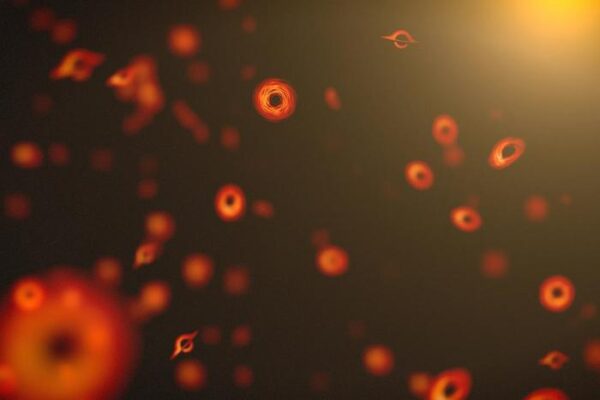
An illustration of small primordial black holes. In reality, such tiny black holes would have a difficult time forming the accretion disks that make them visible here.

Tiny Black Holes May Leave Their Mark in Everyday Objects Here on Earth

Neanderthal eating ice cream

Ancient DNA Reveals Our Long-Standing Love Affair with Carbs

power lines at night

World’s highest-performance superconducting wire segment fabricated

An illustration of optical fibers spinning around the globe.

From Earth to Mars: Transporting spin information at the speed of light

These bites were created with the same set of teeth. Note the distortion.

Study Reveals Unreliability of Bitemark Analysis in Trials

The bone that researchers found belonged to an ancient individual that the Wrangell Cooperative Association named Tatóok yík yées sháawat (Young lady in cave). Credit: University at Buffalo

Searching for ancient bears in an Alaskan cave led to an important human discovery

An African senior gentleman speaks with his doctor during a routine check-up in the doctors office

MS clinicians listen up: Here’s how your patients need you to talk about brain atrophy with them

Petar Pajic, UB PhD student in biological sciences, prepares a saliva sample for separation and analysis. In the new study, the team used a gel electrophoresis technique to separate mucins from other proteins in the saliva of various mammals.

The evolution of mucus: How did we get all this slime?

Hate sites using the wider abortion argument to spread racism and extremism

Previous research led by senior author Praveen Arany (pictured) found that light therapy promotes healing by activating TGF‐beta 1, a protein that controls cell growth and division by stimulating various cells involved in healing.

Light therapy fast-tracks healing of skin damage from cancer radiation therapy

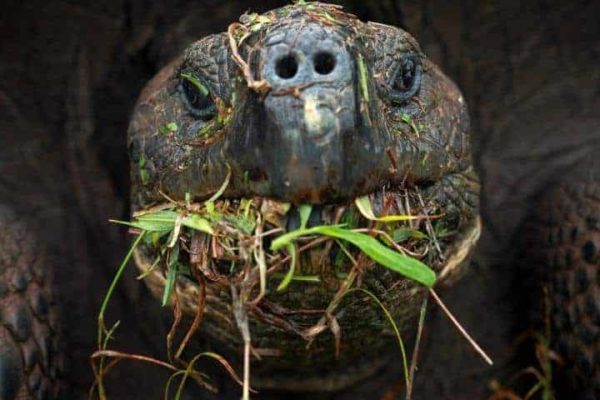
Live long and prosper: Study examines genetic gems in Galápagos giant tortoise genomes

Physics meets democracy in this modeling study

Dental care: The best, worst and unproven tools to care for your teeth

Light therapy helps burn injuries heal faster by triggering growth protein

Older posts
Page1 Page2 Next →
Substack subscription form sign up

Comments

  • brenojames on Global warming reduces available wind energy
  • Kidreadytobreed on Global warming reduces available wind energy
  • James on Global warming reduces available wind energy
  • James on Global warming reduces available wind energy
  • Booklet AI on Key to online education: Test early and often
© 2026 ScienceBlog.com | Follow our RSS / XML feed