Skip to content
ScienceBlog.com
  • Featured Blogs
    • EU Horizon Blog
    • ESA Tracker
    • Experimental Frontiers
    • Josh Mitteldorf’s Aging Matters
    • Dr. Lu Zhang’s Gondwanaland
    • NeuroEdge
    • NIAAA
    • SciChi
    • The Poetry of Science
    • Wild Science
  • Topics
    • Brain & Behavior
    • Earth, Energy & Environment
    • Health
    • Life & Non-humans
    • Physics & Mathematics
    • Social Sciences
    • Space
    • Technology
  • Our Substack
  • Follow Us!
    • Bluesky
    • Threads
    • FaceBook
    • Google News
    • Twitter/X
  • Contribute/Contact

University of Texas

illustration of tax investigator

Tax Whistleblower Law Proves Highly Effective at Reducing Corporate Tax Avoidance

Researchers test a 3D-printed femur design in a universal testing machine, which measures a variety of properties.

Researchers Aim To Get Leg Up on Bone Repair with 3D-Printed Femur

A new study by Guenevere Chen, an assistant professor in the UTSA Department of Electrical and Computer Engineering, and her former doctoral student, Qi Xia, reveals an oversight in AI image recognition tools. The researchers identified and exploited an alpha channel attack on images by developing AlphaDog.

Researchers Uncover Critical Flaw in AI Image Recognition Tools

Scientists were recently surprised to find that the natural community of zooplankton — tiny, aquatic animals known to graze on bacteria — present in freshwater and saltwater do not clean water that is contaminated with fecal microorganisms. Pictured: One of the zooplankton found in the water samples is the adult copepod, a miniature crustacean that is about the size of the period at the end of this sentence.

Zooplankton go “Eew!” to cleaning feces-contaminated water

Physicists at The University of Texas at Arlington have published a study of F-type star systems, in which they explored systems where the planets spend at least part of their orbits in the stellar habitable zones.

Alien Life Hotspots? UTA Study Reveals Overlooked Star Systems with Habitable Potential

Gold nanoparticles are key to University of Texas at Dallas research that has changed researchers’ understanding of how kidneys work at the fundamental level.

X-ray Imaging with Gold Nanoparticles May Outperform Blood Tests in Detecting Kidney Disease

dice that spell dementia

Largest Genetic Study Reveals Overlap in Risk Factors for Alzheimer’s and Vascular Dementia

Xiuning Le, M.D., Ph.D., The University of Texas MD Anderson Cancer Center, Houston

New Drug Shows Promise for Hard-to-Treat Lung Cancer Patients

woman and robot

AI Decision Explanations May Not Improve Human Oversight, Study Finds

Carbon capturing hydrates created in Vaibhav Bahadur's lab.

Team Develops Fastest Carbon Storage Tech Without Harmful Chemicals

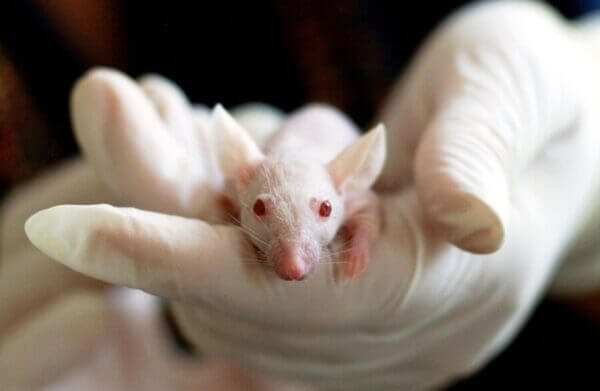
Lab mouse.

Scientists create first mouse model with complete, functional human immune system

The black outline shows the estimated impacted area (1100 square miles) of the 2010 Deepwater Horizon oil spill, significantly larger than previously reported areas (red and blue outlines). Graphic courtesy Masoud Rostami.

Gulf of Mexico Oil Spill Devastated Deep-Sea Ecosystem, Affecting 1,100 Square Miles

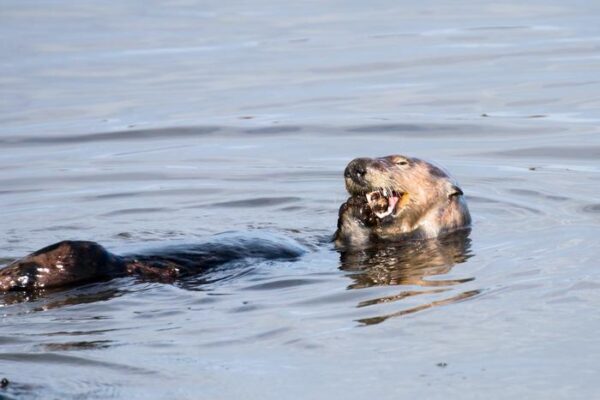
A southern sea otter preys on a marine animal.

Otters, especially females, use tools to survive a changing world

An artistic rendering of ultra-high energy neutrinos passing through the Earth, with the IceCube Observatory sensors deep in the Antarctic glacier at the south pole.

Quantum Gravity Remains Elusive as Ultra-High Energy Neutrinos Show No Signs of Spacetime Fluctuations

Older posts
Newer posts
← Previous Page1 Page2 Page3 … Page6 Next →
Substack subscription form sign up

Comments

  • Marco Messina on More Than a Third of Americans Have Lost Relationships Over Politics
  • Anon on Why Fructose Behaves Less Like a Calorie and More Like a Hormone
  • Mark Mellinger on Living Plastic Can Self-Destruct on Command
  • Marie Feret on The Silent Frequency That Makes Old Buildings Feel Haunted
  • Dax on The Silent Frequency That Makes Old Buildings Feel Haunted
© 2026 ScienceBlog.com | Follow our RSS / XML feed