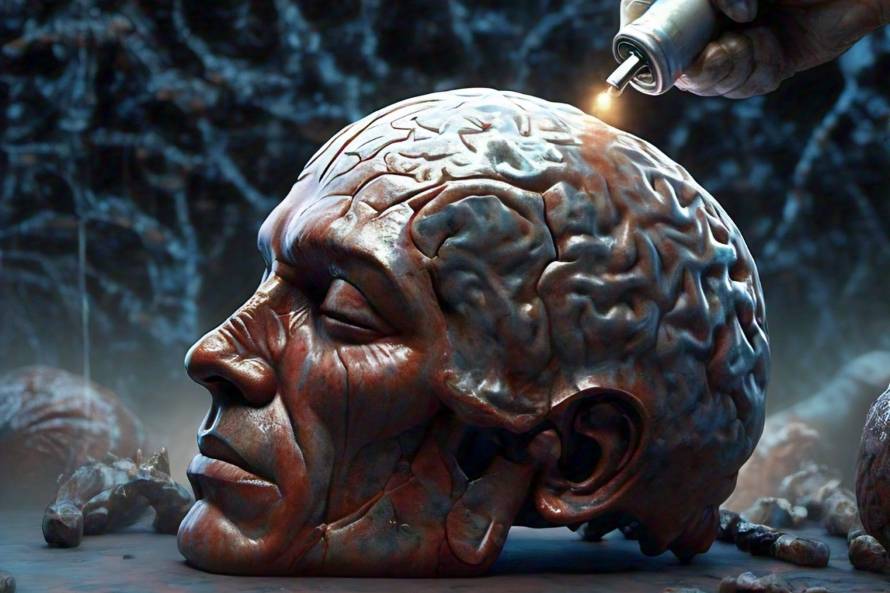
A new study has uncovered a potential link between iron accumulation in the brain and post-traumatic headaches after concussions, suggesting that elevated iron levels could serve as a biomarker for these conditions. The preliminary findings were released today, ahead of their presentation at the American Academy of Neurology’s 76th Annual Meeting.
“These results suggest that iron accumulation in the brain can be used as a biomarker for concussion and post-traumatic headache, which could potentially help us understand the underlying processes that occur with these conditions,” said study author Simona Nikolova, PhD, of the Mayo Clinic in Phoenix, Arizona.
The study involved 60 individuals with post-traumatic headaches due to mild traumatic brain injuries (concussions) and 60 individuals without concussions or post-traumatic headaches. Brain scans were conducted to assess iron levels in various brain regions, using an indirect measure for iron burden.
Compared to those without concussions, individuals with a history of concussion and headaches exhibited higher levels of iron accumulation in several brain areas, including the left occipital area, right cerebellum, and right temporal lobe.
Furthermore, the researchers found that the more concussions an individual had sustained over their lifetime and the more frequent their headaches were, the more likely they were to have higher iron levels in certain brain regions. Additionally, the more time that had passed since the concussion occurred, the higher the likelihood of elevated iron accumulation.
“Previous studies have shown that iron accumulation can affect how areas of the brain interact with each other,” Nikolova said. “This research may help us better understand how the brain responds and recovers from concussion.”
While the study used an indirect measure of iron burden, Nikolova acknowledged the possibility that the observed changes could be due to other factors, such as hemorrhage or changes in tissue water, rather than iron accumulation.
The findings shed light on the potential use of iron accumulation as a biomarker for concussion and post-traumatic headache, offering insights into the brain’s response and recovery mechanisms following these injuries.
#Concussion #IronAccumulation #BrainInjury #BiomarkerResearch