

Plant a few thousand trees a year, forget where you put a fair share of them, and you have accidentally invented forestry.
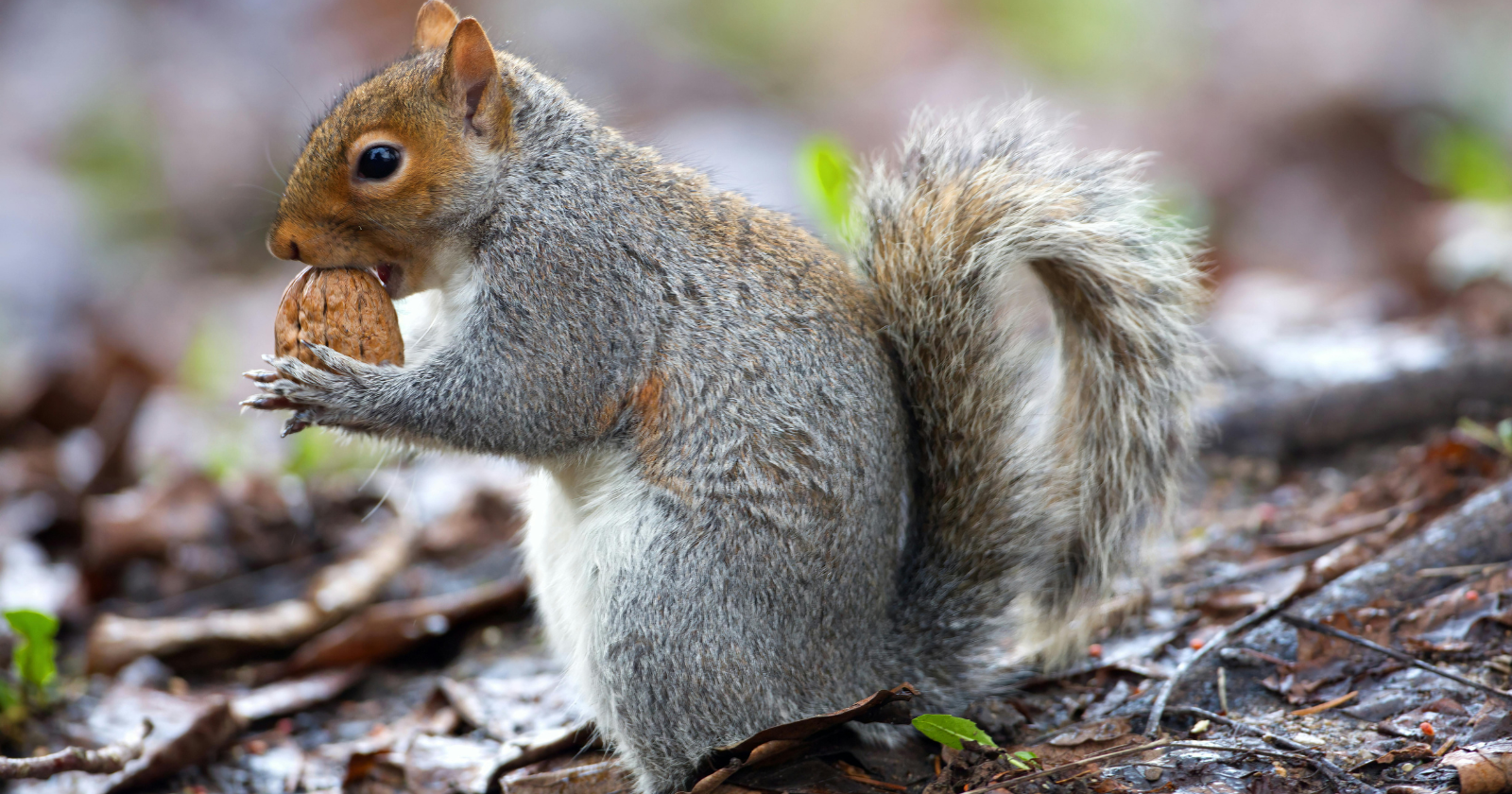
That is roughly the job description of the eastern grey squirrel, an animal with no interest in reforestation and an enormous effect on it. Every autumn it collects acorns from under oaks and buries them one at a time across the neighbourhood, a habit called scatter hoarding. Plenty get dug up over winter. A good share do not, and an acorn left at the depth a squirrel chooses, in open soil away from its parent’s shade, is in close to perfect planting conditions.
Nobody designed this arrangement. It works anyway.
Counting what goes into the ground
Michael Steele of Wilkes University and Peter Smallwood of the University of Richmond have spent decades on the acorn question. Squirrels eat acorns by the thousand, yet the two researchers put the share that gets buried and then never dug up again as high as 74 per cent, enough to tip the balance towards oak regeneration rather than against it.
Volume is what makes that work. Researchers at the University of California, Berkeley put the yearly haul of a single fox squirrel, a close relative, at somewhere between 3,000 and 10,000 nuts. Even a low failure rate on a number like that plants a lot of oak.
Red oak acorns get buried, white oak acorns get eaten
Squirrels are choosy about which acorn goes where. White oak acorns sprout almost as soon as they hit the ground, pushing stored energy down into a root and turning worthless as winter food. Red oak acorns stay dormant until spring.
So the squirrels eat the first sort and bury the second. Steele’s group documented something stranger still in Animal Behaviour: a grey squirrel handed an acorn that has already begun to sprout will bite out the embryo, the growing tip, before burying what is left. Hand-reared squirrels with no previous experience of acorns performed the same surgery, which suggests the behaviour sits closer to hardwired than learned. That is one paper on a small number of subjects, not a settled account of how all tree squirrels behave.
The fake burials
Thieves are the problem, and most of them are other squirrels. National Wildlife magazine has cited estimates of up to a quarter of a hoard lost that way, which is a powerful incentive to put on a show. Dig a hole, pat the soil down over it, and walk off with the nut still tucked in your cheek.
Steele and colleagues watched more than 500 caching trials in Pennsylvania and New England, and reported in a 2008 paper on cache protection that this deceptive covering showed up in about 13 per cent of caching events. It happened more often when another squirrel was within twenty metres, and it measurably cut the rate at which human raiders found the real caches. The authors described it as the first experimental evidence of behavioural deception in a wild rodent.
What the memory is actually doing
The old line about squirrels forgetting everything undersells them badly. Mikel Delgado and Lucia Jacobs, the source of that nut count, tracked 45 free-ranging fox squirrels on the Berkeley campus, handing each one a series of almonds, pecans, hazelnuts and walnuts and then mapping every burial by GPS. Writing in Royal Society Open Science, they found that when the animals collected all their nuts from a single source, they filed each species in its own patch of ground, a memory trick called chunking that humans use for phone numbers and grocery shelves.
One study, one species, one campus population of unusually well-fed urban squirrels.
The lost acorns come out of a system that works well and leaks anyway. No amount of spatial filing survives a hard winter, a rival raiding the stash, or a hawk ending the whole enterprise in October.
What the gaps built
Run that leakage across millions of animals and thousands of years and it starts showing up in the fossil record. Palaeobotanists have long puzzled over how quickly oaks marched north after the last ice sheets pulled back, far faster than acorns rolling downhill from parent trees could manage. The mismatch has a name, Reid’s paradox, and one favoured explanation involves creatures that carry seeds a long way and then lose track of them. A 2004 analysis in the journal Ecology modelled blue jay caching, alongside two other seed-hoarding partnerships, as the mechanism behind the rare long-distance dispersal needed to narrow the gap between theory and the pollen record. Pockets of oak surviving close to the ice remain a competing account.
None of which makes the squirrel a friend of the oak. A review in Frontiers in Ecology and Evolution lays out the double role plainly: these animals are seed predators and seed dispersers at once, and which one dominates depends on the year, the oak species and how many rivals are competing. In a lean autumn they eat nearly everything they find.
So the tree’s best move is volume. Every few years the acorns come down thick enough to make the ground treacherous underfoot, more than any number of squirrels can carry off, and the leftovers do the rest.