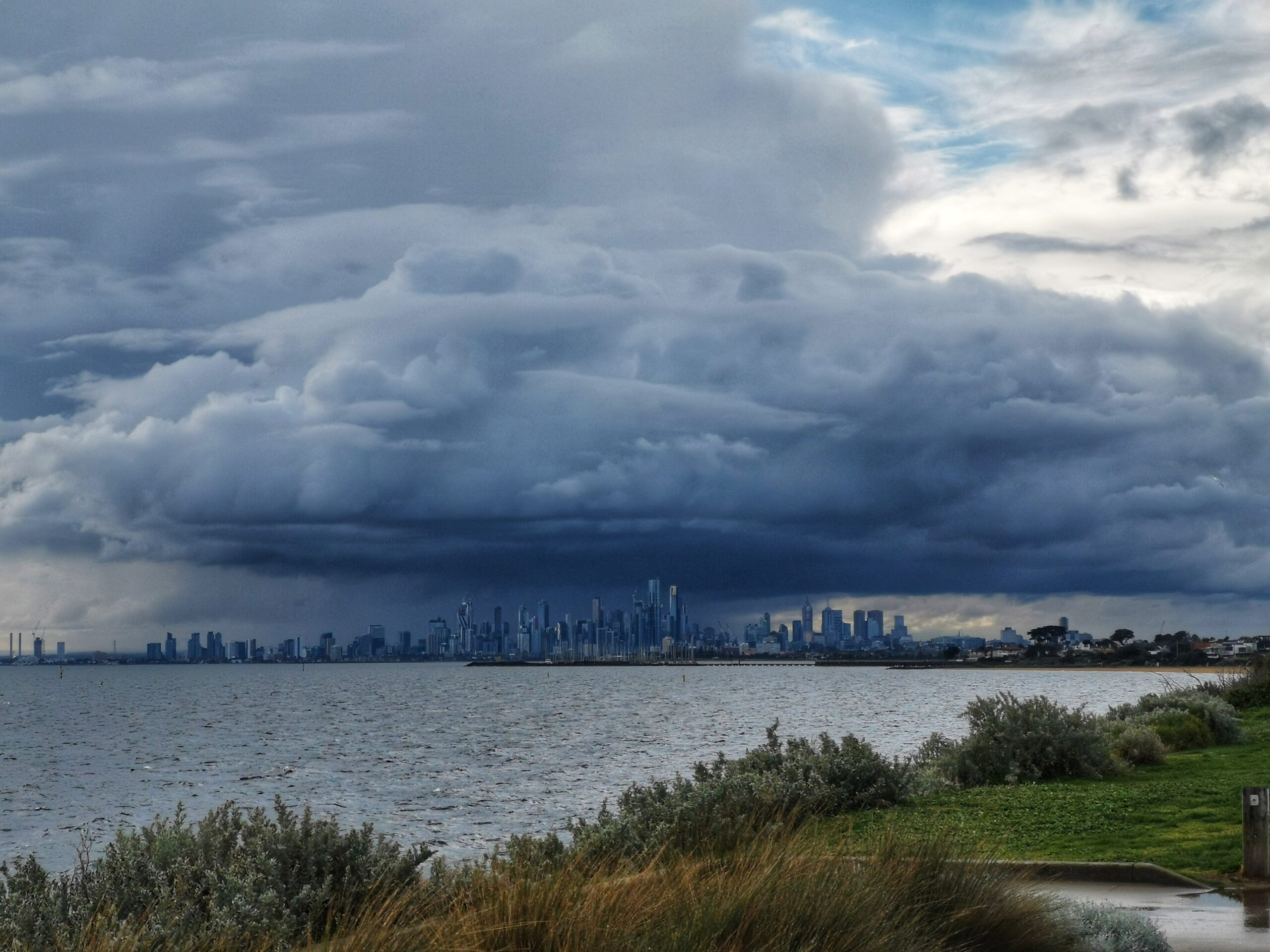
A gust front crossed Melbourne at 6pm on 21 November 2016. Over the next 30 hours, public hospitals in Melbourne and Geelong recorded 476 more asthma related admissions than normal, a 992% increase on the three year average. Ten people died. Of the emergency patients who later answered a telephone questionnaire, only 28% had current doctor diagnosed asthma, and 87% had hay fever.
Those last two figures come from two studies of the same group of patients, Thien and colleagues in The Lancet Planetary Health in 2018 and Hew and colleagues in Allergy in 2019. Both are built on interviews with 1,435 people, 64% of the 2,248 storm affected emergency presentations across eight Melbourne health services. The count of ten deaths is the coroner’s.
I’m from Melbourne, and this story has sat in the background for me ever since it happened. It’s always fascinated me and I never did anything about it. So for this piece I finally sat down with the two papers, the Chief Health Officer’s assessment, the Inspector-General’s review and the coroner’s finding. Most of what I wanted explained is still not explained.
The event turns ten on 21 November 2026. Victoria’s daily thunderstorm asthma risk forecast is running right now, 1 October through to 31 December.
And Melbourne Pollen said in September that Victoria had just recorded its wettest winter since 2016 and its warmest winter on record. Their read is that Melbourne and much of western and central Victoria could see a more active grass pollen season than last year. They hedge that, and the hedge matters. If warm conditions dry the landscape out early, the season may be shorter or less intense.
That Monday in 2016 reached 35°C in Melbourne, and grass pollen was running above 100 grains per cubic metre, which Thien’s team classed as extremely high.
Then the front came through from the west. The temperature dropped 10°C, humidity went above 70%, and the particulate matter in the air concentrated. The coroner records gusts of more than 80 kilometres an hour crossing the city during the afternoon peak, when a lot of people were travelling home from work.
I hadn’t known until I read her finding how ordinary the storm was. A footnote quotes Bureau of Meteorology evidence given to the Inspector-General for Emergency Management stating that “there was nothing particularly remarkable about this storm.”
The calls started almost straight away. In the 12 hours from 6pm the Emergency Services Telecommunications Authority answered 2,332 emergency ambulance calls, which the coroner describes as “the single greatest volume of calls for ambulance assistance received by ESTA in its history”. The Inspector-General’s review records that the surge surpassed the 2009 heatwaves and the Black Saturday bushfires.
The Chief Health Officer’s assessment counts 1,626 more calls across the day than had been forecast, a 73% increase.
By about 6.30pm the ambulance fleet in the West region had no units left to send. By 8pm the list of jobs waiting for dispatch was over 150, and almost 100 of those were Code 1, the most urgent category.
And the cause of all of it was unknown while it was happening. The coroner makes a point of that in her finding: “It is important to appreciate that the cause of the surge of calls was unknown at the time it was occurring.”
The explanation people accept now goes back to a 1992 paper in The Lancet by Suphioglu and colleagues. Rye grass pollen grains are too large to get down into the lower airways. Put them in rainwater, though, and they rupture from osmotic shock. Each grain lets go of about 700 starch granules, each under 3 microns across, small enough to be breathed deep into the lungs. Victoria’s health department says rye grass is the grass thought to be involved in events here.
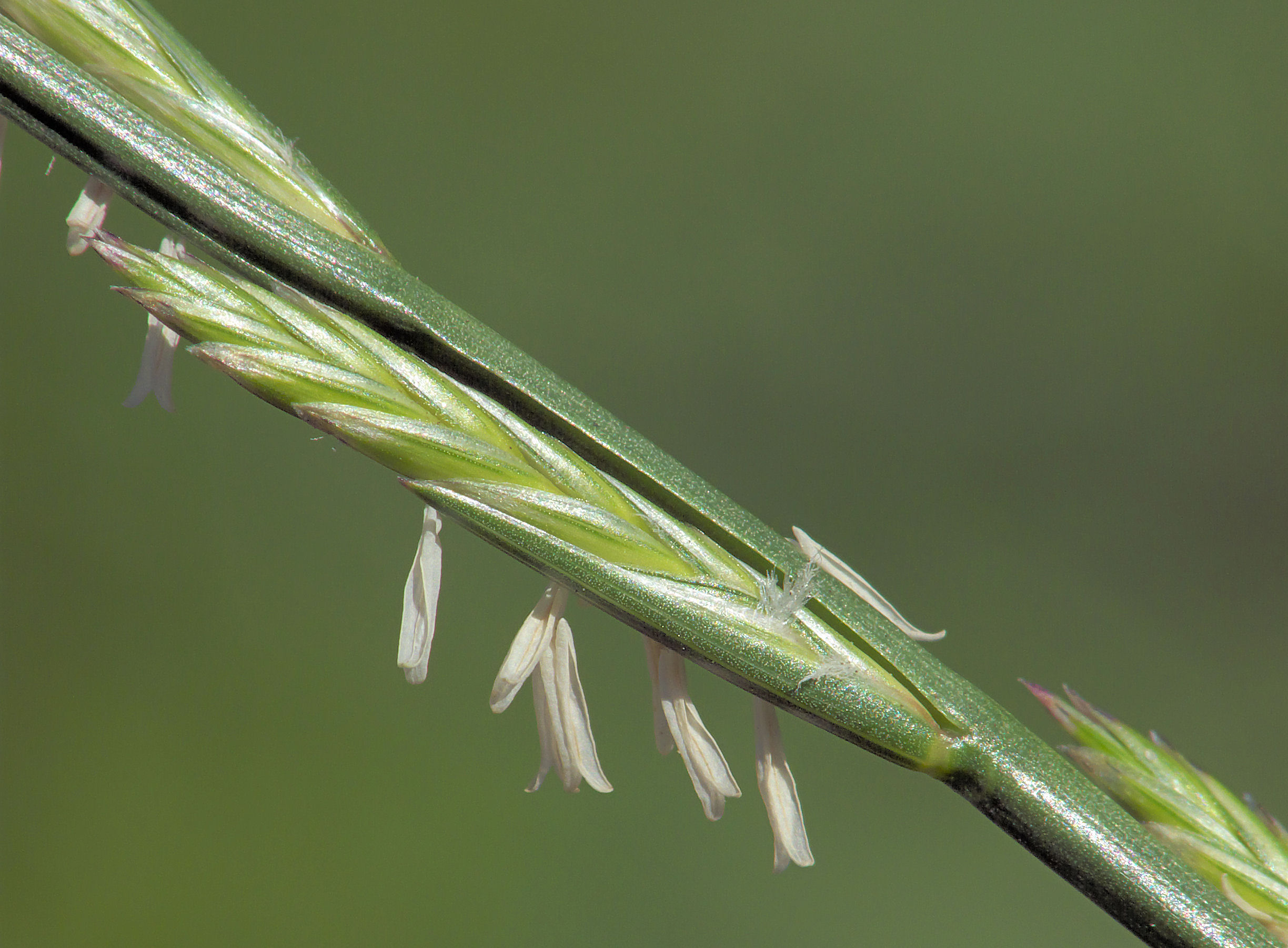
The coroner’s wording is more careful than the version you usually hear. She writes that it is generally understood the storm’s moisture breaks pollen into respirable sized particles, and then adds that “the precise mechanism of a TA event is not clear”.
So why did an ordinary storm over a city used to storms produce the worst event of its kind recorded anywhere? Thien’s team attributes it to “convergent environmental factors”, meaning the extremely high pollen and the gust front arriving together. I went looking for something finer than that and didn’t find it.
The Chief Health Officer’s assessment counted 30 more asthma intensive care admissions than expected in those same 30 hours, a 3,000% increase. Thien counts 35 people in intensive care all up. All 35 had asthma, 12 were taking an inhaled preventer, and five of them died.
Emergency departments across Melbourne and Geelong took 3,365 more respiratory related presentations than expected over the 30 hours, a 672% increase. The sentence from the Chief Health Officer’s report that stayed with me is short: “For many of those affected this was their first asthma attack.”
The ten people who died were aged between 18 and 57. Some died that night and some died days or even weeks later. Both 2017 reports said nine. The Inspector-General’s review said the event “is thought to have contributed to the death of nine people”, and the Chief Health Officer counted nine more asthma deaths than expected between 21 and 30 November. The count was revised to ten after that.
Some groups were hit far harder than their share of the city. In the survey data, 39% of presentations were of Asian or Indian ethnicity, against 25% of Melbourne’s population at the 2016 census. Six of the ten who died were Asian or Indian. Admissions skewed to people born in India or Sri Lanka, 10% of them against 1% over the previous three years, and to people born in south-east Asia, 8% against 1%.
Hew’s analysis then splits in a way I did not expect. Asian patients overall had lower odds of being admitted to hospital than non-Asian patients. Asian patients born in Australia had much higher odds. Hew’s team raises gene-environment interactions as a possible explanation, and the papers I read go no further than that.
Plenty did change afterwards. The Inspector-General made 25 findings and 16 recommendations, and the government accepted all of them in principle. The Department of Health now issues a three day epidemic thunderstorm asthma risk forecast, green for low, orange for moderate, red for high, by combining forecasts of “a certain uncommon type of thunderstorm” with grass pollen forecasts. The department is careful to say these “are not a formal ‘warning'”.
The coroner made no recommendations, on the grounds that so many had been made already, so she made comments instead. One was that the end of call script had changed from “The ambulance is on its way” to “Help is being arranged”, with a new surge script telling callers demand is high, and another was that a caller in that situation needs “effectively an estimated time of arrival of the ambulance”, which the system was not configured to give.
A few things I want to be straight about. The 28% doesn’t mean asthma was beside the point. Every one of those 35 intensive care patients had asthma, and in Hew’s numbers current asthma raised the odds of admission by an adjusted factor of 1.87, rising to 3.16 for anyone admitted for asthma in the previous year. The 28% and the 87% also come from a phone questionnaire that reached 64% of the affected patients, with asthma status self reported.
The climate argument is a projection rather than a measured trend. A 2023 review counts 26 of these events worldwide, 7 of them in Melbourne, and argues that rising pollen production and more frequent storms make them likely to keep coming.
Melbourne gets four to six thunderstorms in or around November and December in an average year, and the coroner’s reading of recent history is an epidemic asthma event only once every two to five years. A five year follow up at one hospital tracked 30 people from 2016 to 2021, and no further event happened in that window to test anything.
In 2018 the coroner called the forecasting system immature, and said the efficacy of awareness campaigns and asthma action plans “has yet to be tested”. I think Victoria is in better shape for a repeat than it was in 2016. She also wrote that it is not clear which particular storms during the pollen season will lead to an event, and after all that reading I can’t tell you which one it will be either.
Sources:
- Thien et al., The Melbourne epidemic thunderstorm asthma event 2016: an investigation of environmental triggers, effect on health services, and patient risk factors, The Lancet Planetary Health, 2018.
- Hew et al., The 2016 Melbourne thunderstorm asthma epidemic: Risk factors for severe attacks requiring hospital admission, Allergy, 2019.
- Victorian Chief Health Officer, The November 2016 Victorian epidemic thunderstorm asthma event: an assessment of the health impacts, 2017.
- Inspector-General for Emergency Management, Review of response to the thunderstorm asthma event of 21–22 November 2016, Final Report, 2017.
- Coroners Court of Victoria, Finding into death with inquest, COR 2016 5534, 2018.
- Suphioglu et al., Mechanism of grass-pollen-induced asthma, The Lancet, 1992.
- Victorian Department of Health, Epidemic thunderstorm asthma risk forecast.
- Melbourne Pollen, Seasonal Outlook for the 2026 Victorian grass pollen season, 2026.