
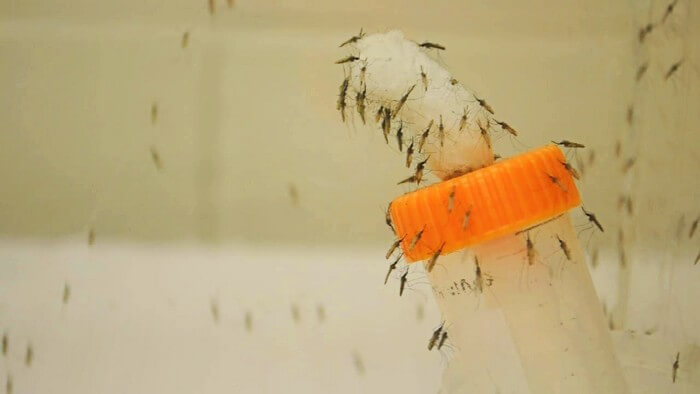
A new study from North Carolina State University has found that mosquitoes may transfer bacteria to humans and household surfaces, in addition to biting and potentially transmitting disease through their blood.
The first-of-its-kind study examined the exterior and interior microbiomes of mosquitoes found in homes in Cote d’Ivoire, Africa.
“Our hypothesis is that mosquitoes can physically transfer bacteria by landing on you or by defecating on household surfaces, like flies do,” said R. Michael Roe, William Neal Reynolds Distinguished Professor of Entomology at NC State and co-corresponding author of the study.
The researchers found that there was greater bacterial diversity internally than externally in the mosquitoes, and also found fructobacillus, which is generally found in nectar sources like flowers and beehives, as well as large amounts of Staphylococcus and two variants of Rickettsia, which are associated with human and animal diseases.
The researchers hope to continue the study by exposing mosquitoes to a bacteria that is not found on human skin and seeing if it transfers to an artificial membrane or human arm.
ScienceBlog.com has no paywalls, no sponsored content, and no agenda beyond getting the science right. Every story here is written to inform, not to impress an advertiser or push a point of view.
Good science journalism takes time — reading the papers, checking the claims, finding researchers who can put findings in context. We do that work because we think it matters.
If you find this site useful, consider supporting it with a donation. Even a few dollars a month helps keep the coverage independent and free for everyone.