

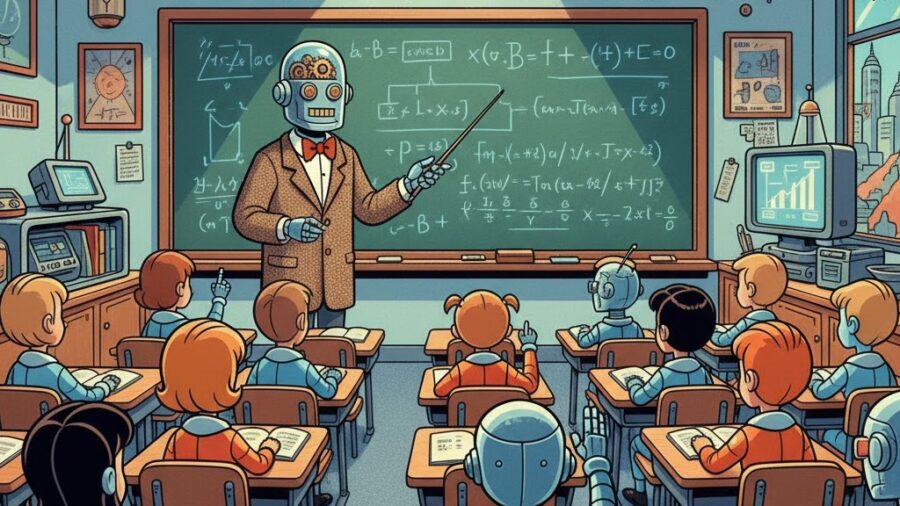
Generative AI is pushing higher education into a profound moment of reckoning.
A new study published in Frontiers of Digital Education examines how rapidly advancing AI systems are reshaping what students must learn and how universities must teach. Led by researchers from Lanzhou Petrochemical University of Vocational Technology and collaborating institutions, the paper argues that the traditional rhythms of curriculum design can no longer keep pace with the speed of technological change. The authors contend that higher education must rebuild its foundations to prepare students for an AI driven world.
The urgency is clear. Institutions are confronting the widening gap between existing course models and the realities of AI powered workplaces, where tools that generate text, images, code, and analysis are already becoming standard. The study lays out a comprehensive framework for AI literacy, ethical integration, interdisciplinary learning, and continuous curriculum updating, offering a blueprint for universities navigating this new landscape.
A New Literacy For A New Era
The authors describe AI literacy as a core competency that every student will need, regardless of major. This literacy includes understanding how models function, recognizing their limits, evaluating their outputs, and using them responsibly in academic and professional settings. The study captures this tension between promise and risk with striking clarity.
“GenAI presents a dichotomy of unprecedented opportunities and significant challenges in education. These tools offer potential for personalized learning experiences, automated routine tasks, and opening new avenues for student creativity, but they simultaneously raise serious concerns about academic integrity, the development of essential critical thinking skills, and the fundamental nature of knowledge creation.”
To address these tensions, the researchers recommend a tiered approach to AI literacy: foundational concepts for all students, applied skills tailored to specific fields, and advanced technical training for AI specialists. They argue that this layered structure allows universities to reach every learner while still supporting deep expertise where it is needed most.
A Curriculum That Evolves As Quickly As AI
One of the study’s central arguments is that curricula cannot remain static in a world where new AI models appear every few months. The authors call for modular course design, dynamic update cycles, and partnerships with industry to ensure academic programs remain relevant. They emphasize that students will need to continually adapt as technologies shift.
“The rapid pace of AI development underscores the fact that AI literacy is not a static skill set but a dynamic competency requiring a commitment to lifelong learning and continuous adaptation.”
This reimagined curriculum requires more than new tools. It demands cultural change: encouraging experimentation, fostering interdisciplinary collaboration, redesigning assessments to prioritize higher order thinking, and training faculty to teach effectively with and about AI. The authors argue that these shifts are essential to empower students to thrive in an unpredictable, technologically saturated future.