

In the winter of 1869, in a converted castle kitchen above the town of Tübingen, a 25-year-old Swiss doctor named Friedrich Miescher was rinsing pus from surgical bandages. He was trying to work out what white blood cells were made of. What he pulled from the nuclei of those cells was a grey, phosphorus-rich substance he had never seen described. He called it nuclein. It was the first purified sample of DNA, and it would take another seventy-four years before anyone proved it carried the code of life.
The bandages came from a nearby surgical clinic. The pus contained leukocytes. The leukocytes contained something new.
Miescher did not know that. He thought he had found a phosphorus store.
A castle kitchen, a distillation apparatus, and a sodium sulphate rinse
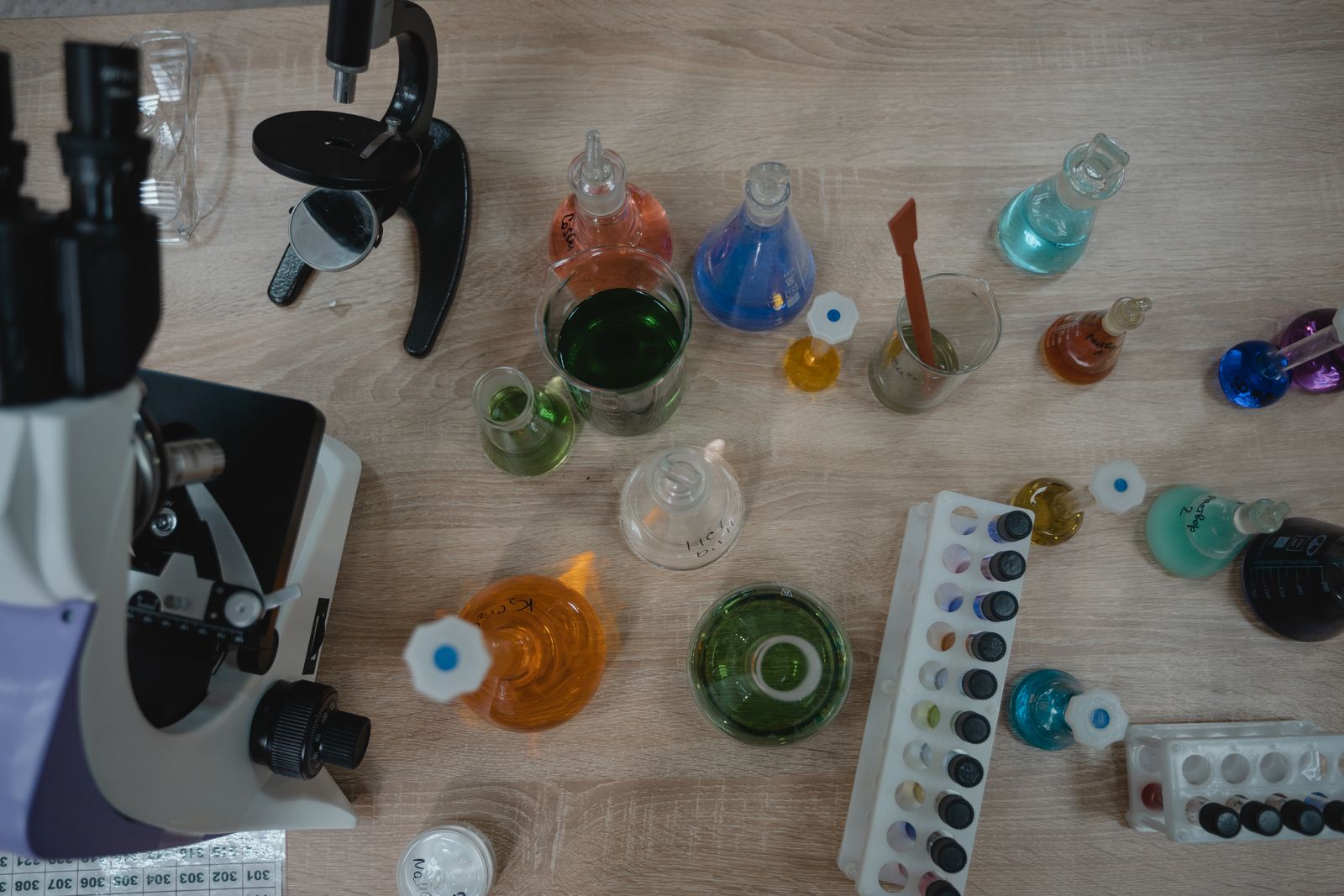
The lab sat inside Hohentübingen Castle, in a room that had been the kitchen until 1818, when the University of Tübingen converted it for chemistry. By the standards of 1869 it was well equipped: a distillation column, glass alembics, a large still producing the water Miescher needed for his rinses. According to a reconstruction of the protocol published in The Scientist, Miescher first washed the bandages with dilute sodium sulphate to loosen the white blood cells, then used warm alcohol and ether to strip out the lipids.
Then came the strange step. He digested the cells with pepsin extracted from pig stomachs. The pepsin chewed through the proteins. Something in the nucleus refused to dissolve.
That residue was nuclein.
His mentor, Felix Hoppe-Seyler, the biochemist who had already named and characterised hemoglobin, was skeptical enough that he repeated the experiments himself before letting the paper appear in his own journal in 1871. As Smithsonian Magazine noted in its account of the Tübingen lab, Hoppe-Seyler’s caution was not obstruction. It was the standard of a working biochemist who understood that a new substance without a category was almost always an artefact.
This one was not an artefact.
Why phosphorus was the clue
Proteins, as Miescher and everyone else in the field understood them, were built from carbon, hydrogen, nitrogen, oxygen, and sulphur. They did not contain phosphorus in any meaningful amount. Nuclein did. It was acidic. It resisted protein-digesting enzymes. It came from the nucleus and only from the nucleus.
By every chemical signature available in 1869, this was a new class of molecule.
Miescher wrote up the finding in a paper with the flat, undramatic title Über die chemische Zusammensetzung der Eiterzellen, or “On the chemical composition of pus cells.” The choice of title tells you how he read his own discovery. He thought he had found a curious storage compound, not the substance that carried heredity. As The Conversation summarised in a 2024 piece on Miescher’s overlooked contribution, he did briefly entertain the idea that nuclein might be involved in inheritance, then discarded it. The prevailing view in the late nineteenth century was that whatever carried heredity had to be a protein, because proteins were complex enough. Nucleic acid, with its handful of building blocks, looked too simple to hold a code.
That intuition would take three-quarters of a century to correct.
The salmon of the Rhine
Pus, as a source material, has limits. Miescher moved on to something cleaner. He began collecting salmon sperm from the Rhine, which turned out to be an almost ideal preparation: cells that were essentially nucleus, with very little cytoplasm to strip away. From salmon sperm he could isolate nuclein in quantities that let him characterise it more carefully.
One of his original test tubes still exists. It sits in the museum that now occupies the old castle kitchen, labelled in his handwriting, containing a coarse brown powder at the bottom: nucleic acid from salmon, prepared in the 1870s. According to the same Smithsonian account, the tube stands almost exactly where Miescher worked.
The lab closed in 1875. The museum opened in 2015.
The seventy-four-year gap
Between Miescher’s paper and the moment DNA was accepted as the carrier of genetic information, several things had to happen. Albrecht Kossel, working from Miescher’s preparations, identified the nucleotide bases in the 1880s and 1890s and won a Nobel Prize for the work in 1910. Phoebus Levene proposed the nucleotide as the repeating unit. Neither of them argued that nuclein carried inheritance. The protein hypothesis held.
The turn came in 1944, when Oswald Avery, Colin MacLeod, and Maclyn McCarty at the Rockefeller Institute in New York showed that the “transforming principle” that could change one strain of pneumococcus bacteria into another was DNA, not protein. As the National Library of Medicine’s archival account of the reception documents, Avery’s result was met with resistance for years. The protein assumption was that entrenched.
Nine years after Avery, in April 1953, Watson and Crick published the double helix in Nature, using the X-ray diffraction work of Rosalind Franklin and Maurice Wilkins. Science Blog has written about the 62-hour X-ray exposure that produced Photo 51, the image that made the helical structure unmistakable. The substance in the photograph was the same substance Miescher had scraped from bandages eighty-four years earlier.
What Miescher got right, and what he didn’t
Miescher was right that nuclein was a distinct chemical class. He was right about the phosphorus content. He was right that it lived in the nucleus. He was right about its acidity. He was even, briefly, right in guessing it might have something to do with heredity, before he talked himself out of it.
He was wrong about the function he settled on. He was wrong about the informational capacity of the molecule. And he never worked out its structure, which would have required tools no one had yet invented.
The BBC Science Focus account of how DNA’s structure was unravelled is a useful reminder that the story from nuclein to double helix ran through dozens of laboratories across three generations of researchers. Miescher was the first link in a chain, not the whole chain.
What is striking, reading his 1871 paper now, is how careful the chemistry is. The reasoning about phosphorus content, the enzymatic digestions, the fractionations: these are the moves of a working biochemist who has genuinely isolated something new and knows it.
He simply could not see, in 1869, what he was holding.
The long view on missed discoveries
The history of biology is dense with these gaps. Mendel published his pea-plant results in 1866, three years before Miescher’s bandages, and was ignored for thirty-four years. In our recent piece on the green Sahara of 6,000 years ago, we noted how much of what we take as fixed knowledge about the past sits on evidence that was collected long before anyone knew what to do with it. Miescher’s nuclein is the same kind of object. A grey powder in a test tube that was, in 1869, unreadable, and that today is the substance every genome sequencer in the world is built to read.
The Denisovan finger bone that gave more than 80% of modern Tibetans their high-altitude EPAS1 variant was, itself, only readable because the chain that began in the Tübingen castle kitchen eventually produced the tools to sequence a genome from a fragment of bone tens of thousands of years old.

The tube on the shelf
The museum in Hohentübingen Castle is about 700 square feet. The distillation apparatus is gone. The lab flasks and vessels sit under glass. Miescher’s original test tube of salmon nucleic acid, sealed with what looks like organic wax at the top, is one item in a row of ordinary-looking chemistry glassware.

Miescher died in 1895, at 51, of tuberculosis. He never learned what nuclein was. The Avery paper was still nearly fifty years away. The double helix was fifty-eight years away. The first human genome sequence, at roughly three billion base pairs, was more than a century off.
The brown powder at the bottom of that tube is still there.