

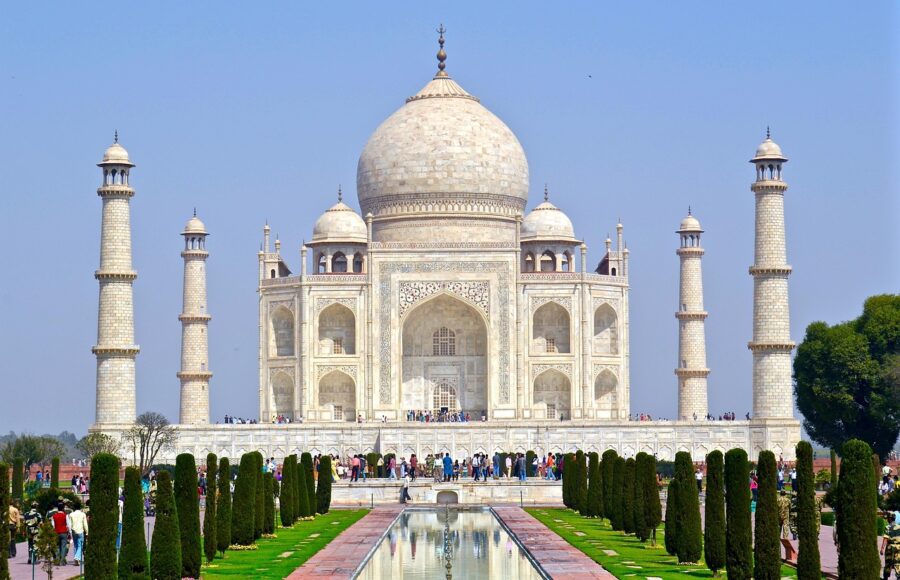
A sweeping new analysis of UNESCO World Heritage sites reveals that four out of five cultural treasures worldwide are already suffering from climate-induced damage, with ancient wooden structures facing particularly severe threats from temperature swings and moisture extremes.
The comprehensive study, published in Communications Earth & Environment, examined 938 cultural heritage sites across the globe using a sophisticated hazard-vulnerability-exposure framework. Researchers found that nearly 19% of sites face threats to multiple key materials simultaneously, a sobering indicator of accelerating climate stress on humanity’s shared cultural legacy.
Wood vs. Stone: A Tale of Different Vulnerabilities
What makes this research particularly striking is its material-specific approach. While previous studies often treated heritage sites as uniform entities, this analysis reveals dramatic differences in how wood and stone structures respond to climate extremes. Wood tends to crack during rapid 15°C temperature cycles, while stone erosion can occur during 10°C fluctuations, creating a complex web of vulnerabilities that varies dramatically by location and construction material.
The timing couldn’t be more critical. From 1961 to the present, climate-induced stress has intensified across most heritage sites, with inland regions showing particularly severe impacts. Central Europe, parts of Asia, and emerging hotspots in semi-arid zones are experiencing what researchers call “compound climate events,” combinations of heat waves, extreme precipitation, and temperature volatility that exceed the tolerance thresholds of heritage materials.
Global Stress Test for Cultural Treasures
Lead researcher Zihua Chen and colleagues used cutting-edge 3D building footprint data combined with multi-decade climate projections to create what amounts to a global stress test for cultural heritage. Their findings suggest that larger wooden heritage sites often demonstrate surprising adaptive resilience, while stone structures face steadily intensifying pressure over time.
The research team’s analysis of future scenarios offers both hope and stark warnings. Under a low-emission pathway aligned with Paris Climate Agreement goals, limiting warming to approximately 1.8°C by 2100, roughly 40% of at-risk sites could experience substantial relief from climate stress. However, a moderate emission scenario of 2.7°C warming provides far less protection.
Regional Winners and Losers
Regional patterns tell a complex story of climate justice and cultural vulnerability. North America shows the greatest preservation potential under aggressive emissions cuts, with around 72% of stone structures and 44% of wooden structures potentially seeing meaningful stress reductions. Meanwhile, many sites in the Southern Hemisphere and parts of Africa show minimal potential for climate relief, regardless of global emission pathways.
The study’s most sobering finding concerns developing nations. Countries like Zimbabwe, Paraguay, and Kyrgyzstan could see roughly 80% of their cultural assets under severe climate stress even if global warming is held near 1.8°C. This disparity is particularly troubling because these regions often lack the technical infrastructure and financial resources available to wealthier nations for heritage preservation.
No One-Size-Fits-All Solution
The research reveals unexpected patterns in material vulnerability. Central Asia and Russia, while showing relatively high potential for climate benefits under low-emission scenarios, simultaneously display 67-100% differences between stone and wood preservation outcomes. These disparities highlight a crucial insight: no single mitigation pathway can uniformly protect all heritage types.
Perhaps most concerning is the study’s revelation about exposure patterns. African heritage sites exhibit what researchers call “high intercepts” in exposure metrics, meaning even smaller sites have sizeable vulnerable footprints. Fewer than 30% of these sites show mitigation benefits under the most ambitious climate scenarios, emphasizing urgent needs for region-specific adaptation strategies.
Beyond Individual Sites: Economic and Cultural Impact
The implications extend far beyond individual sites. Many heritage locations serve as anchors for local economies, cultural identity, and tourism. The research suggests that climate-induced deterioration could accelerate processes like salt crystallization and frost-splintering in stone, while wooden structures face increased decay from moisture extremes, damage that threatens the authenticity and integrity that define Outstanding Universal Value.
The study’s methodology represents a significant advance in heritage risk assessment. Rather than using broad buffer zones or coordinate points, researchers calculated actual exposed surface areas of structures, providing unprecedented precision in vulnerability mapping. This approach revealed that sites with larger specific exposed surfaces face disproportionately higher risks, regardless of their total size.
Shifting Climate Patterns Complicate Planning
Time-series analysis shows that climate pressure on heritage is neither uniform nor linear. Some coastal East Asian regions and northern Australia may see conditions level off or ease later in the century, while risk escalates dramatically in Central Asia, tropical Andes, and much of Central Europe. These shifting patterns complicate long-term preservation planning and resource allocation.
The researchers acknowledge several limitations in their projections. The analysis focuses on temperature and humidity stresses while excluding other climate hazards like storm surges and wildfire. Additionally, the study isolates emissions impacts without accounting for on-site adaptation measures like improved drainage or protective shelters, meaning real-world risks could be lower where such interventions exist.
A Call for International Action
Looking ahead, the research team advocates for a tiered international support framework grounded in climate finance mechanisms. They propose dedicating portions of climate funding specifically for heritage preservation in low-income countries, creating mobile expertise consortia to share 3D documentation technology, and recognizing cultural assets as eligible for green climate finance.
The study’s database and analytical framework are being made publicly available, providing UNESCO and national agencies with tools to prioritize adaptation investments and streamline periodic heritage assessments. This open-source approach could accelerate global efforts to protect cultural treasures before climate impacts become irreversible.
As climate negotiations continue worldwide, this research adds cultural preservation to the growing list of urgent reasons for ambitious emissions reductions. The message is clear: every fraction of a degree matters not just for ecosystems and human communities, but for preserving the irreplaceable cultural achievements that document our shared human story.
Journal: Communications Earth & Environment
DOI: 10.1038/s43247-025-01008-7