Skip to content
ScienceBlog.com
  • Featured Blogs
    • EU Horizon Blog
    • ESA Tracker
    • Experimental Frontiers
    • Josh Mitteldorf’s Aging Matters
    • Dr. Lu Zhang’s Gondwanaland
    • NeuroEdge
    • NIAAA
    • SciChi
    • The Poetry of Science
    • Wild Science
  • Topics
    • Brain & Behavior
    • Earth, Energy & Environment
    • Health
    • Life & Non-humans
    • Physics & Mathematics
    • Social Sciences
    • Space
    • Technology
  • Our Substack
  • Follow Us!
    • Bluesky
    • Threads
    • FaceBook
    • Google News
    • Twitter/X
  • Contribute/Contact

Age

lymph vessels

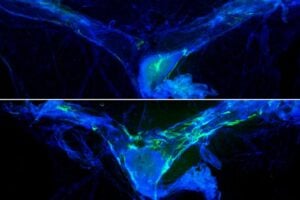
Aging Brain’s Trash Collection System Holds Key to Memory Restoration

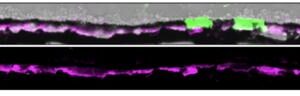
A cross-section of the retinal pigment epithelium in an ACE2-expressing mouse infected with SARS-CoV-2. Top image: Bright-field view with immunofluorescence showing SARS-CoV-2 N-protein (green) and complement component C3b (magenta). Bottom image: Immunofluorescence of C3b alone. Widespread C3b accumulation is visible, even though N-protein expression is limited to two small regions. Scale bars: 50 µm.

COVID-19 Infection May Accelerate Age-Related Vision Loss

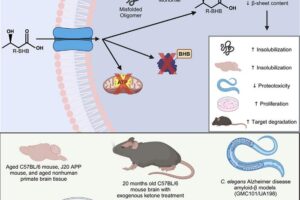
B-hydroxybutyrate is a metabolic regulator of proteostasis in the aged and Alzheimer’s disease brain

Ketone Bodies Are The Brain’s Natural Protein Cleanup Crew

woman's eye

New research offers hope for preventing age-related blindness

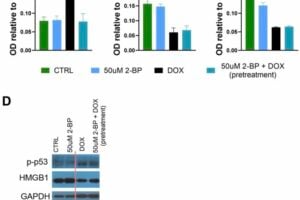
Figure 4. Effect of 2-BP treatment on senescence markers. Levels of p-p53 (A), HMGB1 (B), and lamin B1 (C) were measured in cell extracts from VSMCs. Cells were either pretreated with 2-BP for 24 hours before doxorubicin (DOX) treatment or treated with 2-BP alone for the specified durations. Protein levels were assessed using Western blotting, with representative blots shown (the red line indicates where the blot was cut) (D). Data are presented as means ± SEM from N=3 biological replicates. Statistical significance was determined using one-way ANOVA; *p

Protein Modification May Hold Key to Reversing Cellular Aging

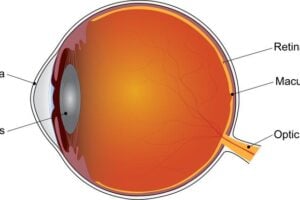
Age-related macular degeneration affects the macula, the part of the retina that provides central vision.

Supplements slow disease progression during late stage of “dry” age-related macular degeneration

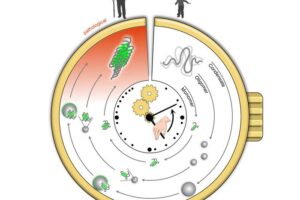
Visualization of a protein aggregation clock

A new approach to assessing aging and disease risk: The protein aggregation clock

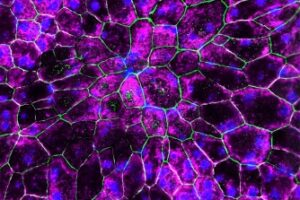
Front cover from June’s Science Translational Medicine showing rescued retinal pigment epithelium (RPE) cells following IRAK-M gene therapy

Boosting key protein in eye cells could prevent age-related vision loss

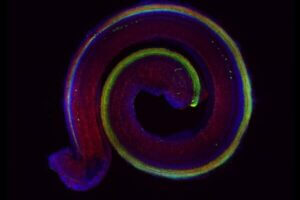
Fluorescence microscopic image of a murine cochlea: the hair cells are marked in green, the cell skeleton in red and the cell nuclei with genetic material in blue.

New findings pave the way for hearing loss therapies

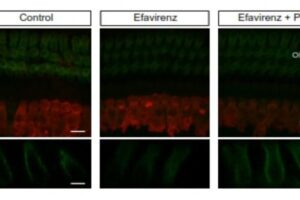
Prestin expression in OHCs from control, efavirenz, and efavirenz plus phytosterols-treated mice.

Common supplements might reduce natural hearing loss

Composite image from generative AI and Adobe Stock (Michael S. Helfenbein)

Eyes Play Quantum Chemistry with Melanin: Glasses Not Included

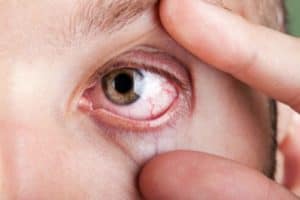
A man's eye being held pen by two fingers

Age-related macular degeneration a risk factor for severe COVID-19 infection

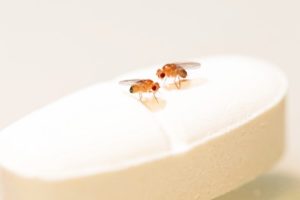
Fruit flies on a rapamycin pill

Do women age differently from men?
Substack subscription form sign up

Comments

  • Norwood johnson on Electrons in New Crystals Behave as If They Live in Four Dimensions
  • ScienceBlog.com on Hidden Geometry Could Finally Fix Quantum Computers
  • Theo Prinse on America Is Going Back to the Moon. This Time, It Plans to Stay
  • george w on Hidden Geometry Could Finally Fix Quantum Computers
  • Tom Hughes on Years of Exercise, Blood Pressure Drugs Failed to Slow Cognitive Decline in Seniors at Dementia Risk
© 2026 ScienceBlog.com | Follow our RSS / XML feed