Skip to content
ScienceBlog.com
  • Featured Blogs
    • EU Horizon Blog
    • ESA Tracker
    • Experimental Frontiers
    • Josh Mitteldorf’s Aging Matters
    • Dr. Lu Zhang’s Gondwanaland
    • NeuroEdge
    • NIAAA
    • SciChi
    • The Poetry of Science
    • Wild Science
  • Topics
    • Brain & Behavior
    • Earth, Energy & Environment
    • Health
    • Life & Non-humans
    • Physics & Mathematics
    • Social Sciences
    • Space
    • Technology
  • Our Substack
  • Follow Us!
    • Bluesky
    • Threads
    • FaceBook
    • Google News
    • Twitter/X
  • Contribute/Contact

aging process

A split image showing an elderly person struggling in the heat on one side and another elderly person shivering in the cold on the other side, with a thermometer in the middle displaying rising temperatures.

Poor people age faster

woman with grey hair

The Science of Gray Hair: Causes, Prevention, and Future Treatments

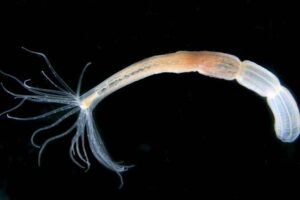
A single Nematostella polyp.

Sea Anemone’s Stem Cells May Hold Key to Immortality

fat molecule build up in cells seen under a microscope

Exercise can cut specific fat in cells that indicate aging

Smaller dogs may live twice as long life as their larger counterparts.

How body size shapes dogs’ aging patterns

Researchers at the Pennington Biomedical Research Center and the University of Alabama at Birmingham are conducting a study to see if eating for 8 hours and fasting for 16 each day can slow the aging process in people and are looking for healthy adults aged 25-49 to participate.

Intermittent fasting could slow aging

Substack subscription form sign up

Comments

  • Karoly Mirnics on Common Prescription Drugs May Disrupt Cholesterol Pathways in the Womb and Raise Autism Risk
  • Aizen on Laziness helped lead to extinction of Homo erectus
  • Norwood johnson on Electrons in New Crystals Behave as If They Live in Four Dimensions
  • ScienceBlog.com on Hidden Geometry Could Finally Fix Quantum Computers
  • Theo Prinse on America Is Going Back to the Moon. This Time, It Plans to Stay
© 2026 ScienceBlog.com | Follow our RSS / XML feed