Skip to content
ScienceBlog.com
  • Featured Blogs
    • EU Horizon Blog
    • ESA Tracker
    • Experimental Frontiers
    • Josh Mitteldorf’s Aging Matters
    • Dr. Lu Zhang’s Gondwanaland
    • NeuroEdge
    • NIAAA
    • SciChi
    • The Poetry of Science
    • Wild Science
  • Topics
    • Brain & Behavior
    • Earth, Energy & Environment
    • Health
    • Life & Non-humans
    • Physics & Mathematics
    • Social Sciences
    • Space
    • Technology
  • Our Substack
  • Follow Us!
    • Bluesky
    • Threads
    • FaceBook
    • Google News
    • Twitter/X
  • Contribute/Contact

Altruism

Fossil CN-46700

Finding of First Neandertal Child with Down Syndrome Reveals Ancient Compassion

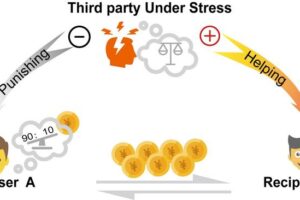
Acute stress decreased the third party’s willingness to punish the violator and the severity of the punishment, and increased their willingness to help the victim. Created with Adobe Illustrator.

Under stress, an observer is more likely to help the victim than to punish the perpetrator

Man covering his ears. Pixabay

‘I’d rather not know’: Why we choose ignorance

The concept for the UCLA study emerged from the idea that systemic racism and COVID-19 are interconnected “twin pandemics.”

Those who support Black Lives Matter tend to be less hesitant about vaccines

Substack subscription form sign up

Comments

  • Brunette Keller on How New Herpes Drugs Jam a Virus’s Replication Engine
  • Aizen on Laziness helped lead to extinction of Homo erectus
  • Norwood johnson on Electrons in New Crystals Behave as If They Live in Four Dimensions
  • ScienceBlog.com on Hidden Geometry Could Finally Fix Quantum Computers
  • Theo Prinse on America Is Going Back to the Moon. This Time, It Plans to Stay
© 2026 ScienceBlog.com | Follow our RSS / XML feed