Skip to content
ScienceBlog.com
  • Featured Blogs
    • EU Horizon Blog
    • ESA Tracker
    • Experimental Frontiers
    • Josh Mitteldorf’s Aging Matters
    • Dr. Lu Zhang’s Gondwanaland
    • NeuroEdge
    • NIAAA
    • SciChi
    • The Poetry of Science
    • Wild Science
  • Topics
    • Brain & Behavior
    • Earth, Energy & Environment
    • Health
    • Life & Non-humans
    • Physics & Mathematics
    • Social Sciences
    • Space
    • Technology
  • Our Substack
  • Follow Us!
    • Bluesky
    • Threads
    • FaceBook
    • Google News
    • Twitter/X
  • Contribute/Contact

Animals

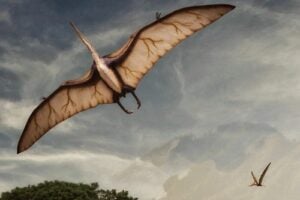
The pterosaur likely used all four limbs to propel itself in the air, as seen in bats today, researchers have found.

Giant prehistoric flying reptile took off using similar method to bats, study finds

Ohio State logo

Bedtime or go time? Observing what animals do during a total solar eclipse

Learning about objects: the treat is always only on the white plate or only on the black plate, the other is empty.

The way dogs see the world: Objects are more salient to smarter dogs

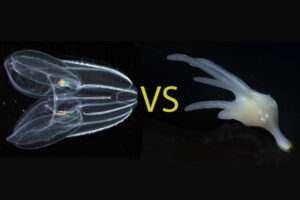
Scientists have long debated whether comb jellies (left) or sponges (right) are the sister group to all other animals. A detailed comparison of the chromosomes of these and other animals to the chromosomes of three single-celled non-animal groups finally resolves the question. (Photos courtesy of MBARI)

What did the earliest animals look like?

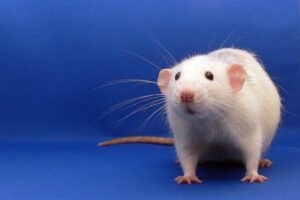
white rate on a black background

Rats! Rodents seem to make the same logical errors humans do

Substack subscription form sign up

Comments

  • Monte Dale Jr on Cracks Are Appearing in the Geometric Assumption Underlying All of Modern Cosmology
  • Monte Dale Jr on Cracks Are Appearing in the Geometric Assumption Underlying All of Modern Cosmology
  • Not Buying Yer Bullshit on More Than a Third of Americans Have Lost Relationships Over Politics
  • Marco Messina on More Than a Third of Americans Have Lost Relationships Over Politics
  • Anon on Why Fructose Behaves Less Like a Calorie and More Like a Hormone
© 2026 ScienceBlog.com | Follow our RSS / XML feed