Skip to content
ScienceBlog.com
  • Featured Blogs
    • EU Horizon Blog
    • ESA Tracker
    • Experimental Frontiers
    • Josh Mitteldorf’s Aging Matters
    • Dr. Lu Zhang’s Gondwanaland
    • NeuroEdge
    • NIAAA
    • SciChi
    • The Poetry of Science
    • Wild Science
  • Topics
    • Brain & Behavior
    • Earth, Energy & Environment
    • Health
    • Life & Non-humans
    • Physics & Mathematics
    • Social Sciences
    • Space
    • Technology
  • Our Substack
  • Follow Us!
    • Bluesky
    • Threads
    • FaceBook
    • Google News
    • Twitter/X
  • Contribute/Contact

Antibiotics

Nikola Zlatkov Kolev, postdoc at the Department of Molecular Biology, Umeå University.

Nanoplastics Found to Reduce Antibiotic Effectiveness and Promote Resistance

prevotellin 2 drawing

New Antibiotics Discovered in Human Gut Could Combat Drug-Resistant Bacteria

Horse

Bacterial gut diversity improves the athletic performance of racehorses

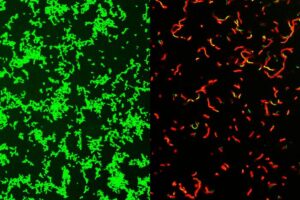
Researchers at Washington University School of Medicine in St. Louis have developed a compound that is effective against common bacteria that can lead to rare, dangerous illnesses. This image shows untreated Streptococcus pyogenes bacterial culture full of healthy microbes, labeled green (left). After treatment by GmPcide, the dish is full of dead bacteria (red; right).

New Antibiotic Compound Shows Promise Against Deadly Flesh-Eating Bacteria

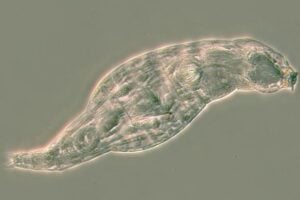
This rotifer has just survived a life-threatening infection. When a fungal disease attacked, she switched on hundreds of genes that her ancestors copied from microbes, including antibiotic recipes stolen from bacteria. Notes: This animal is about a quarter of a millimetre long and belongs to the species Adineta ricciae. It has two red eyes on its head.

Tiny Wheel Animals Steal Bacterial Genes to Make Their Own Antibiotics

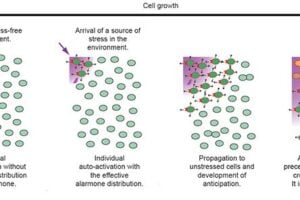
A (light green) bacterial cell detects a source of stress and becomes activated (dark green). It then produces alarmones (depicted as red triangles) and can transmit them to neighboring cells via cell-to-cell contact (black arrows). As the source of stress arrives, the percentage of activated cells increases, converting unstressed neighboring cells and triggering the stress response mechanism.

Bacteria’s Secret ‘Alarm System’ Against Antibiotics Uncovered

Allen and his colleagues found evidence supporting the idea that changes to the gut microbiome play a role in the system-wide inflammation that often occurs with aging.

Gut microbes from aged mice induce inflammation in young mice

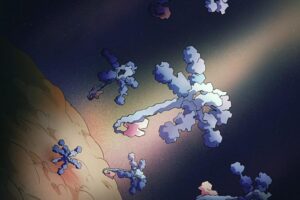
Umbrella-shaped antibacterial toxin particles drifting toward and engaging a bacterial target cell. The toxins are derived from Streptomyces and potently inhibit the growth of competing species in the same genus.

Scientists Discover Toxic “Umbrella” Proteins Used by Soil Bacteria in Microbial Warfare

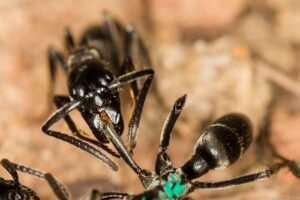
A Matabele ant tends to the wound of a fellow ant whose legs were bitten off in a fight with termites.

Ants recognize infected wounds and treat them with antibiotics

roach

Cockroaches can transmit antimicrobial resistance genes between groups

Australian honeypot ants in various sizes.

Western science catches up with First Nations’ medicinal use of ant honey

Brian Vander Ley poses with Ginger, the first gene-edited cow resistant to bovine viral diarrheal virus (BVDV).

Gene-edited super calf resistant to brutal virus

A bowl of fruit cereal

Junk food and antibiotics: A recipe for disaster for your tummy

Scanned electron micrograph image of Neisseria gonorrhoeae bacteria, which can cause gonorrhea.

Doxycycline cuts sexually transmitted infections by two-thirds

Older posts
Page1 Page2 Next →
Substack subscription form sign up

Comments

  • Karoly Mirnics on Common Prescription Drugs May Disrupt Cholesterol Pathways in the Womb and Raise Autism Risk
  • Aizen on Laziness helped lead to extinction of Homo erectus
  • Norwood johnson on Electrons in New Crystals Behave as If They Live in Four Dimensions
  • ScienceBlog.com on Hidden Geometry Could Finally Fix Quantum Computers
  • Theo Prinse on America Is Going Back to the Moon. This Time, It Plans to Stay
© 2026 ScienceBlog.com | Follow our RSS / XML feed