Skip to content
ScienceBlog.com
  • Featured Blogs
    • EU Horizon Blog
    • ESA Tracker
    • Experimental Frontiers
    • Josh Mitteldorf’s Aging Matters
    • Dr. Lu Zhang’s Gondwanaland
    • NeuroEdge
    • NIAAA
    • SciChi
    • The Poetry of Science
    • Wild Science
  • Topics
    • Brain & Behavior
    • Earth, Energy & Environment
    • Health
    • Life & Non-humans
    • Physics & Mathematics
    • Social Sciences
    • Space
    • Technology
  • Our Substack
  • Follow Us!
    • Bluesky
    • Threads
    • FaceBook
    • Google News
    • Twitter/X
  • Contribute/Contact

Astrobiology

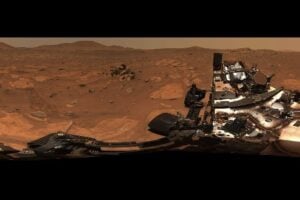
This 360-degree mosaic from the “Airey Hill” location inside Jezero Crater was generated using 993 individual images taken by the Perseverance Mars rover’s Mastcam-Z from Nov. 3-6. The rover remained parked at Airey Hill for several weeks during solar conjunction. Credit: NASA/JPL-Caltech/ASU/MSSS

NASA’s Perseverance Rover Deciphers Ancient History of Martian Lake

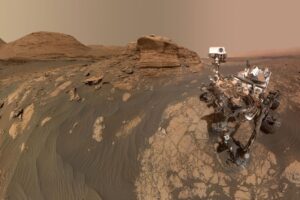
NASA’s Curiosity Mars rover used two different cameras to create this selfie in front of Mont Mercou, a rock outcrop that stands 20 feet tall. New analysis by Penn State researchers reveals that much of the craters on Mars today could have once been habitable rivers. Credit: NASA/JPL-Caltech/MSSS. All Rights Reserved.

Curiosity rover finds new evidence of ancient Mars rivers, a key signal for life

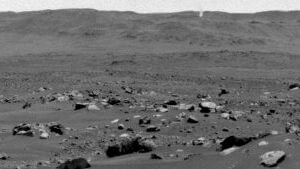
Martian dustdevil

NASA’s Perseverance Captures Dust-Filled Martian Whirlwind

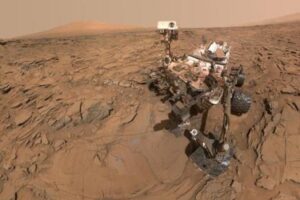
Image: A selfie, taken by the Curiosity rover on the surface of Mars in June 2016. The Curiosity rover used the pyrolysis-GCMS equipment described in this notice (Secondary Creator Credit: NASA/JPL-Caltech/MSSS).

Scientists develop AI method to identify life on other worlds

Life requires repetition of chemical reactions. Describing the kinds of reactions and conditions required for self-sustaining repetition — called autocatalysis — could focus the search for life on other planets.

New recipes for origin of life may point way to distant, inhabited planets

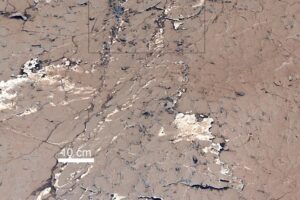
This raw image from the Curiosity Rover shows the hexagon-shaped mudcracks filled with salt.

New insights into the potential for early steps of biological evolution on Mars

Ohio State logo

Using cosmic weather to study which worlds could support life

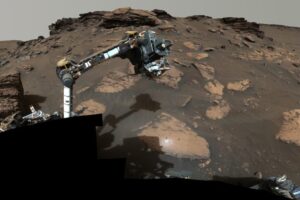
NASA’s Perseverance Mars rover uses SHERLOC – one of several instruments on the end of its robotic arm – to study rocks in an area nicknamed “Skinner Ridge.” Credit: NASA/JPL-Caltech/ASU/MSSS

NASA’s Perseverance Rover Sees Mars in a New Light

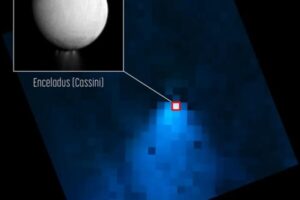
SwRI contributed to new Cycle 1 JWST findings that show the plume of water escaping from Saturn’s moon Enceladus extends 6,000 miles or more than 40 times the moon’s size. In light of this discovery, SwRI’s Dr. Christopher Glein was awarded a NASA JWST Cycle 2 allocation to study the plume as well as the icy surface of Enceladus, to better understand the potential habitability of this ocean world.

Saturn’s Moon Enceladus Throws Water Party Visible from Space

Erupting volcano

Meteoritic and volcanic particles may have promoted origin of life reactions

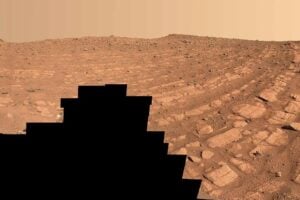
Bands of rocks may have been formed by a very fast, deep river – the first such evidence found for on Mars

Wild river on Mars emerges from images, rock evidence

Mars and water

Rover finds evidence of water at low latitudes on modern Mars

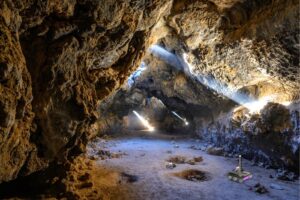
In this artist's impression of the breadcrumb scenario, autonomous rovers can be seen exploring a lava tube after being deployed by a mother rover that remains at the entrance to maintain contact with an orbiter or a blimp.

Hansel and Gretel’s breadcrumb trick inspires robotic exploration of caves on Mars and beyond

Mars

Better tools needed to determine ancient life on Mars

Older posts
Newer posts
← Previous Page1 Page2 Page3 Next →
Substack subscription form sign up

Comments

  • Karoly Mirnics on Common Prescription Drugs May Disrupt Cholesterol Pathways in the Womb and Raise Autism Risk
  • Aizen on Laziness helped lead to extinction of Homo erectus
  • Norwood johnson on Electrons in New Crystals Behave as If They Live in Four Dimensions
  • ScienceBlog.com on Hidden Geometry Could Finally Fix Quantum Computers
  • Theo Prinse on America Is Going Back to the Moon. This Time, It Plans to Stay
© 2026 ScienceBlog.com | Follow our RSS / XML feed