Skip to content
ScienceBlog.com
  • Featured Blogs
    • EU Horizon Blog
    • ESA Tracker
    • Experimental Frontiers
    • Josh Mitteldorf’s Aging Matters
    • Dr. Lu Zhang’s Gondwanaland
    • NeuroEdge
    • NIAAA
    • SciChi
    • The Poetry of Science
    • Wild Science
  • Topics
    • Brain & Behavior
    • Earth, Energy & Environment
    • Health
    • Life & Non-humans
    • Physics & Mathematics
    • Social Sciences
    • Space
    • Technology
  • Our Substack
  • Follow Us!
    • Bluesky
    • Threads
    • FaceBook
    • Google News
    • Twitter/X
  • Contribute/Contact

Atherosclerosis

An AI-generated image showing a person with an angry expression, with a close-up of a blood vessel in the background. The blood vessel could be depicted as constricted or impaired, symbolizing the temporary negative impact of anger on vascular function

Anger May Temporarily Impair Blood Vessel Function, Increasing Heart Attack and Stroke Risk

Heart illustration

Alternate Day Fasting May Worsen Atherosclerosis, Chinese Study Suggests

Illustration of a human body without skin

Study finds new treatment to reverse inflammation and arterial blockages in rheumatoid arthritis

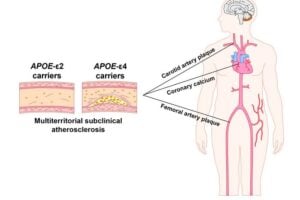
Individuals who carry the APOE4 gene variant have an elevated riskof developing subclinical atherosclerosis in middle age, whereas carriers of the variant APOE2 are protected.

APOE genetic variants linked to Alzheimer’s also tied to aterosclerosis

Cardiovascular disease: researchers pinpoint missing piece of treatment puzzle

Substack subscription form sign up

Comments

  • Sue Ann Hayes on Hidden Nuclear Protein Fuels Pancreatic Cancer’s Deadly Aggression
  • Curtis Webber on The GPS-Killer? This Quantum Device ‘Feels’ Motion Like a Brain—Down to the Atomic Level
  • Ran on How the Age You First Had Sex Could Shape How You Age Decades Later
  • Sparty on How the Age You First Had Sex Could Shape How You Age Decades Later
  • Josh Mitteldorf on A Single TV Segment Sent Leucovorin Prescriptions for Autistic Children Soaring 2,000 Percent
© 2026 ScienceBlog.com | Follow our RSS / XML feed