Skip to content
ScienceBlog.com
  • Featured Blogs
    • EU Horizon Blog
    • ESA Tracker
    • Experimental Frontiers
    • Josh Mitteldorf’s Aging Matters
    • Dr. Lu Zhang’s Gondwanaland
    • NeuroEdge
    • NIAAA
    • SciChi
    • The Poetry of Science
    • Wild Science
  • Topics
    • Brain & Behavior
    • Earth, Energy & Environment
    • Health
    • Life & Non-humans
    • Physics & Mathematics
    • Social Sciences
    • Space
    • Technology
  • Our Substack
  • Follow Us!
    • Bluesky
    • Threads
    • FaceBook
    • Google News
    • Twitter/X
  • Contribute/Contact

Atmospheric Science

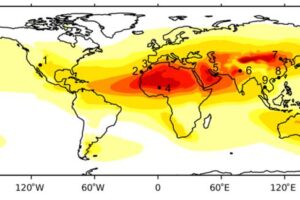
Map showing dust concentration across the globe

Engine wear risk as planes swallow more dust waiting to land

X-ray laser studies help researchers identify early steps in the freezing process to better understand how clouds make ice and their effect on climate. (Greg Stewart/SLAC National Accelerator Laboratory)

Unlocking the mysteries of freezing in supercooled water droplets

Clouds in the sky provide new clues to predicting climate change

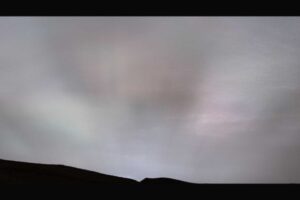
NASA’s Curiosity Mars rover captured these “sun rays” shining through clouds at sunset on Feb. 2, 2023, the 3,730th Martian day, or sol, of the mission. It was the first time that sun rays, also known as crepuscular rays, have been viewed so clearly on Mars. Credit: NASA/JPL-Caltech/MSSS

NASA’s Curiosity Views First ‘Sun Rays’ on Mars

Substack subscription form sign up

Comments

  • Karoly Mirnics on Common Prescription Drugs May Disrupt Cholesterol Pathways in the Womb and Raise Autism Risk
  • Aizen on Laziness helped lead to extinction of Homo erectus
  • Norwood johnson on Electrons in New Crystals Behave as If They Live in Four Dimensions
  • ScienceBlog.com on Hidden Geometry Could Finally Fix Quantum Computers
  • Theo Prinse on America Is Going Back to the Moon. This Time, It Plans to Stay
© 2026 ScienceBlog.com | Follow our RSS / XML feed