Skip to content
ScienceBlog.com
  • Featured Blogs
    • EU Horizon Blog
    • ESA Tracker
    • Experimental Frontiers
    • Josh Mitteldorf’s Aging Matters
    • Dr. Lu Zhang’s Gondwanaland
    • NeuroEdge
    • NIAAA
    • SciChi
    • The Poetry of Science
    • Wild Science
  • Topics
    • Brain & Behavior
    • Earth, Energy & Environment
    • Health
    • Life & Non-humans
    • Physics & Mathematics
    • Social Sciences
    • Space
    • Technology
  • Our Substack
  • Follow Us!
    • Bluesky
    • Threads
    • FaceBook
    • Google News
    • Twitter/X
  • Contribute/Contact

Autism

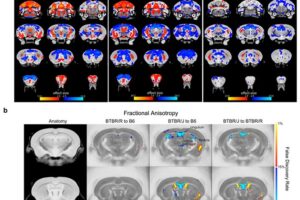
a. Brain structure comparisons of the following mice: Left: BTBR/R and B6 (normal mouse), Center: Comparison of BTBR/J and B6, Right: BTBR/J and BTBR/R. b. Diffusion tensor imaging to compare differences in nerve fibers. Red indicates the brain regions that were either bigger or had increased numbers of nerve fibers in BTBR/J mice in comparison to either B6 (left and center images) or BTBR/R (right image). Conversely, blue indicates brain regions in BTBR/J mice that were comparatively smaller or had decreased numbers of nerve fibers. These scans revealed particularly significant differences between BTBR/J and BTBR/R mice’s corpus callosum.

Ancient virus genome drives autism?

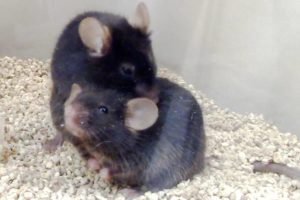
Mice engage in grooming behavior, experiencing a phenomenon researchers call pleasant touch. Researchers from the Washington University Center for the Study of Itch and Sensory Disorders have identified a specific neuropeptide and a neural circuit that transmit pleasant touch from the skin to the brain. The findings eventually may help scientists better understand and treat disorders characterized by touch avoidance and impaired social development.

Drug alleviates autism-associated behavior in mice

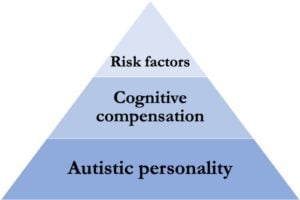
The three factors have different weights, and jointly build up to the diagnosis of autism.

Model explains how autism arises

Newer posts
← Previous Page1 Page2
Substack subscription form sign up

Comments

  • Karoly Mirnics on Common Prescription Drugs May Disrupt Cholesterol Pathways in the Womb and Raise Autism Risk
  • Aizen on Laziness helped lead to extinction of Homo erectus
  • Norwood johnson on Electrons in New Crystals Behave as If They Live in Four Dimensions
  • ScienceBlog.com on Hidden Geometry Could Finally Fix Quantum Computers
  • Theo Prinse on America Is Going Back to the Moon. This Time, It Plans to Stay
© 2026 ScienceBlog.com | Follow our RSS / XML feed