Skip to content
ScienceBlog.com
  • Featured Blogs
    • EU Horizon Blog
    • ESA Tracker
    • Experimental Frontiers
    • Josh Mitteldorf’s Aging Matters
    • Dr. Lu Zhang’s Gondwanaland
    • NeuroEdge
    • NIAAA
    • SciChi
    • The Poetry of Science
    • Wild Science
  • Topics
    • Brain & Behavior
    • Earth, Energy & Environment
    • Health
    • Life & Non-humans
    • Physics & Mathematics
    • Social Sciences
    • Space
    • Technology
  • Our Substack
  • Follow Us!
    • Bluesky
    • Threads
    • FaceBook
    • Google News
    • Twitter/X
  • Contribute/Contact

autonomous vehicles

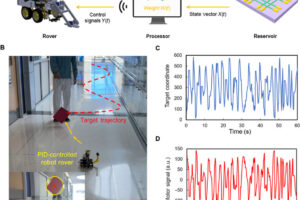
(A) Schematic sketch for illustrating the implementation of the memristive network–based RC system for rover control through processing time-sequential sensory signals. Here, voltage-based analog sensory signals carrying spatiotemporal information components are input to the memristive reservoir. These input signals are differentiated and nonlinearly mapped to a high-dimensional data space based on the temporal contexts of the input sensory signals and are quantitatively represented by the reservoir state vector X(t), which is constructed from the voltage readings at multiple neuron terminals. Afterward, the state vector is multiplied by a pretrained weight matrix W(t) to export the output signals Y(t) for controlling the testing rover. (B to D) Training data acquisition for emulating PID control of a robot rover for performing target-tracking navigation: (B) snapshot captured from the training video, showing the PID-controlled rover tracing after a red-moving target (the inset view is a snapshot from the ESP32-based internet-of-things (IoT) camera on the rover); (C) exemplary target coordinate data plotted as the function of time points; (D) exemplary motor signal data generated by a digital PID controller, plotted as the function of time points.

Brain-like computer steers rolling robot with 0.25% of the power needed by conventional controllers

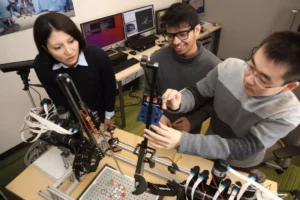
Homa Alemzadeh’s lab uses model and data-driven design and evaluation innovations to advance safety and security assurance of medical devices and systems, surgical robots and autonomous systems.

Autonomous vehicles can be imperfect — As long as they’re resilient

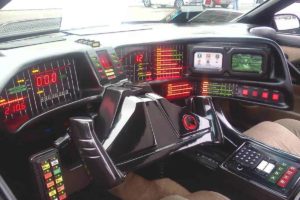
Knight Rider car KITT

Trust, more than knowledge, critical for acceptance of fully autonomous vehicles

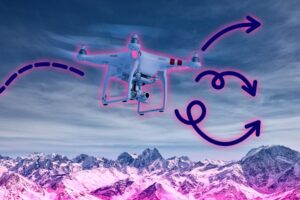
Researchers from MIT and Stanford University created a machine-learning method that can derive a controller for a robot, drone, or autonomous vehicle that is more effective at following a stable trajectory than other methods. This technique could help, for instance, a drone to closely follow a downhill skier despite being buffeted by strong winds. Credits:Image: MIT News, with figures from iStock

A simpler method for learning to control a robot

Ohio State logo

Testing real driverless cars in a virtual environment

Making drones suitable for cities

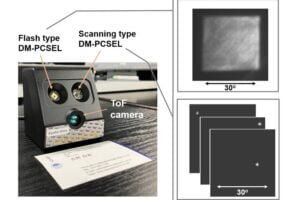
Researchers developed a new nonmechanical 3D lidar system, which is the size of a business card (seen in front of the system on the left). The system uses dually modulated surface-emitting photonic-crystal lasers (DM-PCSELs) as flash and beam-scanning sources.

New 3D lidar system could make autonomous driving safer

Artistic overhead view of an intersection of streets at night

Researchers propose a fourth light on traffic signals – for self-driving cars

Locust on a leaf

Preventing vehicle crashes by learning from insects

MIT researchers determined that 1 billion autonomous vehicles, each driving for one hour per day with a computer consuming 840 watts, would consume enough energy to generate about the same amount of emissions as data centers currently do. Credits:Image: Christine Daniloff, MIT

Car computers could run over environment

Substack subscription form sign up

Comments

  • Norwood johnson on Electrons in New Crystals Behave as If They Live in Four Dimensions
  • ScienceBlog.com on Hidden Geometry Could Finally Fix Quantum Computers
  • Theo Prinse on America Is Going Back to the Moon. This Time, It Plans to Stay
  • george w on Hidden Geometry Could Finally Fix Quantum Computers
  • Tom Hughes on Years of Exercise, Blood Pressure Drugs Failed to Slow Cognitive Decline in Seniors at Dementia Risk
© 2026 ScienceBlog.com | Follow our RSS / XML feed