Skip to content
ScienceBlog.com
  • Featured Blogs
    • EU Horizon Blog
    • ESA Tracker
    • Experimental Frontiers
    • Josh Mitteldorf’s Aging Matters
    • Dr. Lu Zhang’s Gondwanaland
    • NeuroEdge
    • NIAAA
    • SciChi
    • The Poetry of Science
    • Wild Science
  • Topics
    • Brain & Behavior
    • Earth, Energy & Environment
    • Health
    • Life & Non-humans
    • Physics & Mathematics
    • Social Sciences
    • Space
    • Technology
  • Our Substack
  • Follow Us!
    • Bluesky
    • Threads
    • FaceBook
    • Google News
    • Twitter/X
  • Contribute/Contact

bats

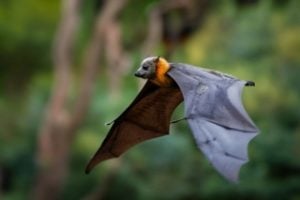
flying bat

Bats’ Built-in Backup System for When They Can’t Hear

bat in a bag with researcher

Bats Defy Diabetes: How Sugar-Loving Species Thrive on Extreme Blood Sugar Levels

Bat teeth

Fruit, nectar, bugs and blood: How bat teeth and jaws evolved for a diverse dinnertime

Artibeus jamaicensis, the Jamaican fruit bat

How bats evolved to avoid cancer

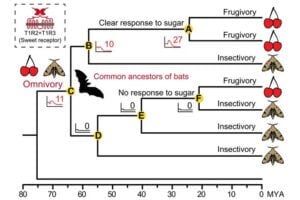
The ancestral sweet receptor of all extant bats (Node C) was functionally sensitive to natural sugars, with a lower level of sugar sensitivity than modern pteropodid bats (Node A), suggesting that common ancestors of bats were omnivorous.

Common ancestors of bats were omnivorous suggested by resurrection of ancestral sweet receptors

Pixabay. Bat illustration, green, superimposing bat over Covid virus particles.

To prevent future pandemics, leave bats alone

Substack subscription form sign up

Comments

  • Karoly Mirnics on Common Prescription Drugs May Disrupt Cholesterol Pathways in the Womb and Raise Autism Risk
  • Aizen on Laziness helped lead to extinction of Homo erectus
  • Norwood johnson on Electrons in New Crystals Behave as If They Live in Four Dimensions
  • ScienceBlog.com on Hidden Geometry Could Finally Fix Quantum Computers
  • Theo Prinse on America Is Going Back to the Moon. This Time, It Plans to Stay
© 2026 ScienceBlog.com | Follow our RSS / XML feed