Skip to content
ScienceBlog.com
  • Featured Blogs
    • EU Horizon Blog
    • ESA Tracker
    • Experimental Frontiers
    • Josh Mitteldorf’s Aging Matters
    • Dr. Lu Zhang’s Gondwanaland
    • NeuroEdge
    • NIAAA
    • SciChi
    • The Poetry of Science
    • Wild Science
  • Topics
    • Brain & Behavior
    • Earth, Energy & Environment
    • Health
    • Life & Non-humans
    • Physics & Mathematics
    • Social Sciences
    • Space
    • Technology
  • Our Substack
  • Follow Us!
    • Bluesky
    • Threads
    • FaceBook
    • Google News
    • Twitter/X
  • Contribute/Contact

biochemistry

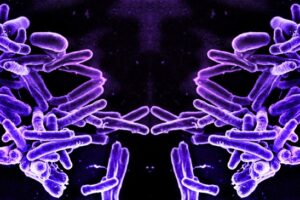
Mirror life could pose unpredictable risks to health and the environment.

“Mirror Life” is Still a Hypothetical. Here’s Why it Should Probably Stay That Way.

Ohio State logo

Ohio State professor named Blavatnik National Awards finalist

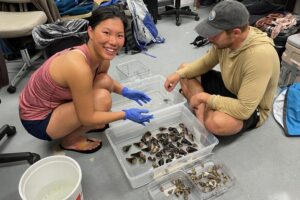
Ho Yan Yeung, PhD, first author on the study (left) and Thomas Koch, PhD, also an author on the study (right) examine a freshly-collected batch of cone snails. Image credit: Safavi Lab.

Deadly Sea Snail Venom Offers Promising Clues for New Diabetes and Hormone Treatments

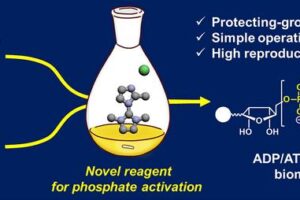
Researchers used a novel phosphate-activation reagent, 2-MeImIm-Cl, in an improved coupling reaction to increase the yield of ADP- or ATP-containing molecules. Unlike traditional reactions, the modified coupling reaction does not require protecting groups, is simple to perform and exhibits high reproducibility.

Chemists Unlock Efficient Way to Create Cellular Energy Molecules

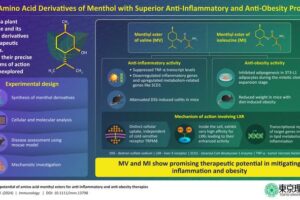
Fighting fat and inflammation

Menthol Derivatives Show Promising Anti-Inflammatory and Anti-Obesity Effects

Ohio State logo

Study confirms how RNA chemical modifications benefit HIV-1

High-resolution illustration of cells and virus

Researchers Unveil Elusive HIV Protein Structure, Paving the Way for Targeted Treatments

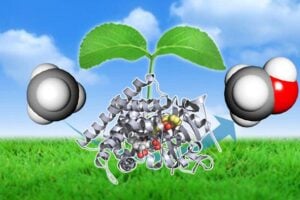
New technology converts a component of natural gas, methane (left), to methanol (right), using the P450BM3 enzyme (middle, grey) with a decoy molecule (middle, colored). This method can be a cheap and effective mean of reducing the carbon footprint of natural gas.

Reducing the carbon footprint of methane by converting it into methanol with a new enzyme

David Fonseca Hernández working in the CIATEJ laboratory.

Unique Mexican black and pinto bean varieties are high in healthy compounds

A soybean protein blocks LDL cholesterol production, reducing risks of metabolic diseases

Substack subscription form sign up

Comments

  • Karoly Mirnics on Common Prescription Drugs May Disrupt Cholesterol Pathways in the Womb and Raise Autism Risk
  • Aizen on Laziness helped lead to extinction of Homo erectus
  • Norwood johnson on Electrons in New Crystals Behave as If They Live in Four Dimensions
  • ScienceBlog.com on Hidden Geometry Could Finally Fix Quantum Computers
  • Theo Prinse on America Is Going Back to the Moon. This Time, It Plans to Stay
© 2026 ScienceBlog.com | Follow our RSS / XML feed