Skip to content
ScienceBlog.com
  • Featured Blogs
    • EU Horizon Blog
    • ESA Tracker
    • Experimental Frontiers
    • Josh Mitteldorf’s Aging Matters
    • Dr. Lu Zhang’s Gondwanaland
    • NeuroEdge
    • NIAAA
    • SciChi
    • The Poetry of Science
    • Wild Science
  • Topics
    • Brain & Behavior
    • Earth, Energy & Environment
    • Health
    • Life & Non-humans
    • Physics & Mathematics
    • Social Sciences
    • Space
    • Technology
  • Our Substack
  • Follow Us!
    • Bluesky
    • Threads
    • FaceBook
    • Google News
    • Twitter/X
  • Contribute/Contact

biomechanics

Graphic showing functional optimality drives repeated evolution of extreme sabertooth forms

Extreme Sabre-Tooth Morphology: Perfect for Puncturing

University of Illinois evolution, ecology and behavior professor Philip Anderson, pictured, and his colleague Bingying Zhang found that thin animal skin significantly dissipates the energy of a puncturing projectile. In their experiments, skin worked better than a thicker synthetic gel designed to mimic skin.

Thin skin significantly blunts injury from puncture

The pterosaur likely used all four limbs to propel itself in the air, as seen in bats today, researchers have found.

Giant prehistoric flying reptile took off using similar method to bats, study finds

mudskipper

To walk, you just need fins and a sense of adventure

Woman rinsing her face in a bathroom sink. Pixabay

Why faces feel “tight” after being washed

Pitt Professors Anne Robertson and Naoki Yoshimura with the University of Sheffield receive more than $3.2 million R01 grant to help design patient specific treatments for BOO patients

Building the first-ever digital twin of the bladder

Ladybug on a person's fingertip

Scientists decipher the fingertip’s ‘memory’

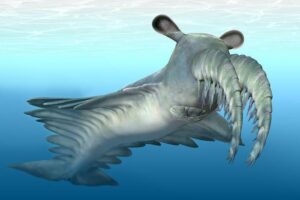
Apex predator of the Cambrian likely sought soft over crunchy prey

Ancient Sea Scourge Not So Fearsome After All

Natural tooth (left) compared with tooth tailored by generative AI (right).

Using ChatGPT-like tech for better dental crowns

Woman in running pants and sports bra

The right sports bra may increase your running performance by 7%

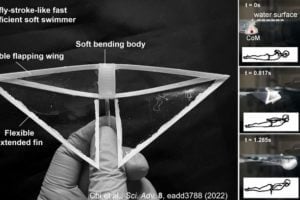
Inspired by the biomechanics of the manta ray, researchers at North Carolina State University have developed an energy-efficient soft robot that can swim more than four times faster than previous swimming soft robots. The robots are called “butterfly bots,” because their swimming motion resembles the way a person’s arms move when they are swimming the butterfly stroke.

‘Butterfly bot’ is fastest swimming soft robot yet

Substack subscription form sign up

Comments

  • Karoly Mirnics on Common Prescription Drugs May Disrupt Cholesterol Pathways in the Womb and Raise Autism Risk
  • Aizen on Laziness helped lead to extinction of Homo erectus
  • Norwood johnson on Electrons in New Crystals Behave as If They Live in Four Dimensions
  • ScienceBlog.com on Hidden Geometry Could Finally Fix Quantum Computers
  • Theo Prinse on America Is Going Back to the Moon. This Time, It Plans to Stay
© 2026 ScienceBlog.com | Follow our RSS / XML feed