Skip to content
ScienceBlog.com
  • Featured Blogs
    • EU Horizon Blog
    • ESA Tracker
    • Experimental Frontiers
    • Josh Mitteldorf’s Aging Matters
    • Dr. Lu Zhang’s Gondwanaland
    • NeuroEdge
    • NIAAA
    • SciChi
    • The Poetry of Science
    • Wild Science
  • Topics
    • Brain & Behavior
    • Earth, Energy & Environment
    • Health
    • Life & Non-humans
    • Physics & Mathematics
    • Social Sciences
    • Space
    • Technology
  • Our Substack
  • Follow Us!
    • Bluesky
    • Threads
    • FaceBook
    • Google News
    • Twitter/X
  • Contribute/Contact

Biomedical Applications

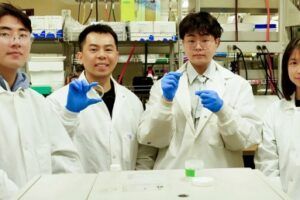
The Hydrogel Research Subgroup in Assistant Professor Siyuan Rao’s Neurobiological Interfaces Lab includes, from left, Chen Lin ’24; lecturer Sizhe Huang, PhD '24; Ruobai Xiao ’24; and PhD student Zuer Wu.

Stretchy Spinal Sensors: New Hydrogel Tech Could Transform Neural Monitoring

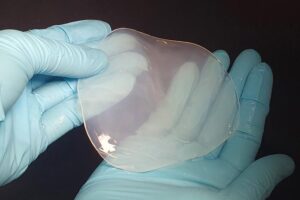
Bacterial cellulose in the wet state.

How researchers turn bacteria into cellulose-producing mini-factories

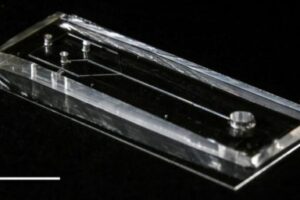
microfluidic device

Look out Spider-Man: Naturalistic silk spun from artificial spider gland

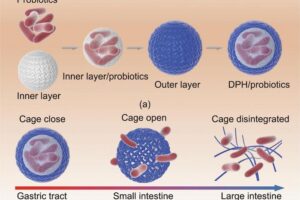
(a) Design rationale of the DPH; (b) mechanism of intestine-targeted delivery.

Innovative new shell revolutionizes oral delivery of probiotics

Substack subscription form sign up

Comments

  • Anon on Why Fructose Behaves Less Like a Calorie and More Like a Hormone
  • Mark Mellinger on Living Plastic Can Self-Destruct on Command
  • Marie Feret on The Silent Frequency That Makes Old Buildings Feel Haunted
  • Dax on The Silent Frequency That Makes Old Buildings Feel Haunted
  • Karoly Mirnics on Common Prescription Drugs May Disrupt Cholesterol Pathways in the Womb and Raise Autism Risk
© 2026 ScienceBlog.com | Follow our RSS / XML feed