Skip to content
ScienceBlog.com
  • Featured Blogs
    • EU Horizon Blog
    • ESA Tracker
    • Experimental Frontiers
    • Josh Mitteldorf’s Aging Matters
    • Dr. Lu Zhang’s Gondwanaland
    • NeuroEdge
    • NIAAA
    • SciChi
    • The Poetry of Science
    • Wild Science
  • Topics
    • Brain & Behavior
    • Earth, Energy & Environment
    • Health
    • Life & Non-humans
    • Physics & Mathematics
    • Social Sciences
    • Space
    • Technology
  • Our Substack
  • Follow Us!
    • Bluesky
    • Threads
    • FaceBook
    • Google News
    • Twitter/X
  • Contribute/Contact

brain disorders

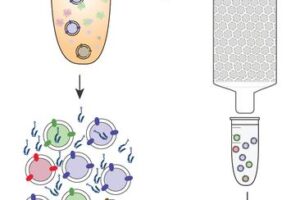
The team’s overall goal was to be able to compare the amounts of α-synuclein protein contained in extracellular vesicles (right side) relative to α-synuclein contained in total plasma (left side). To achieve the former, they innovated an already validated EV-isolation and analysis process with a critical “protein protection assay.”

Breakthrough in Parkinson’s Disease Detection: New Blood Test Method Shows Promise

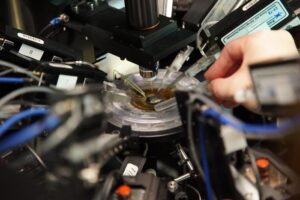
The octo-patch rig is a specialized microscope allowing neuroscientists to record electrical properties from and map connections between up to eight neurons simultaneously.

Zapping the right brain cells: The path to improved stimulation

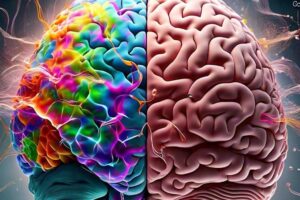
An illustration depicting a human brain with colorful, pulsating waves emanating from different regions

Bursts of Beta Rhythms in the Brain Hold the Key to Understanding Cognition, Scientists Argue

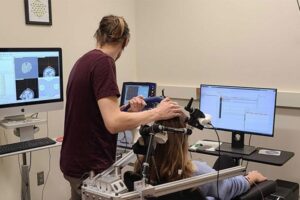
Researchers using non-invasive neuromodulation, a technique that has shown promising results in reducing symptoms of depression, Alzheimer’s disease, and Parkinson’s disease.

Breakthrough in Brain Stimulation: Scientists Discover New Way to Modulate Behavior

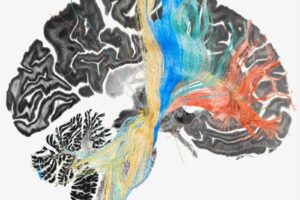
Fiber bundles associated with symptom improvement following deep brain stimulation in Parkinson’s disease (green), dystonia (yellow), Tourette’s syndrome (blue),and obsessive-compulsive disorder (red). Courtesy of Barbara Hollunder.

Researchers use deep brain stimulation to map therapeutic targets for four brain disorders

brain illustration

MIT Study Reveals Universal Brain Patterns

Neurons. Pixabay

New kind of brain cell rocks neuroscience

Brain disorders trigger search for new clues and cures

Illustration of a brain with a door opening

A New Mechanism for Crossing the Blood–Brain Barrier

The illustration shows the cell types and brain regions affected by six different neurodegenerative diseases: Friedreich's ataxia (purple); Huntington's disease (blue); frontotemporal dementia (yellow); amyotrophic lateral sclerosis (ALS), also known as motor neuron disease (MND) or Lou Gehrig's disease (green); Parkinson's disease (orange); and Alzheimer's disease (pink).

Common features among neurodegenerative diseases, opening door to early diagnosis and treatment

Substack subscription form sign up

Comments

  • Karoly Mirnics on Common Prescription Drugs May Disrupt Cholesterol Pathways in the Womb and Raise Autism Risk
  • Aizen on Laziness helped lead to extinction of Homo erectus
  • Norwood johnson on Electrons in New Crystals Behave as If They Live in Four Dimensions
  • ScienceBlog.com on Hidden Geometry Could Finally Fix Quantum Computers
  • Theo Prinse on America Is Going Back to the Moon. This Time, It Plans to Stay
© 2026 ScienceBlog.com | Follow our RSS / XML feed