Skip to content
ScienceBlog.com
  • Featured Blogs
    • EU Horizon Blog
    • ESA Tracker
    • Experimental Frontiers
    • Josh Mitteldorf’s Aging Matters
    • Dr. Lu Zhang’s Gondwanaland
    • NeuroEdge
    • NIAAA
    • SciChi
    • The Poetry of Science
    • Wild Science
  • Topics
    • Brain & Behavior
    • Earth, Energy & Environment
    • Health
    • Life & Non-humans
    • Physics & Mathematics
    • Social Sciences
    • Space
    • Technology
  • Our Substack
  • Follow Us!
    • Bluesky
    • Threads
    • FaceBook
    • Google News
    • Twitter/X
  • Contribute/Contact

breast cancer

cooking oil

Common Cooking Oil Fuels Aggressive Breast Cancer Growth

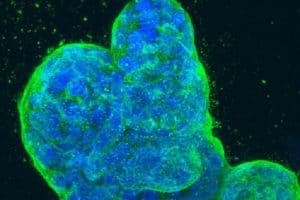
Three-dimensional culture of human breast cancer cells, with DNA stained blue and a protein in the cell surface membrane stained green. Image by NIH

One Shot Wonder: New Drug Eliminates Large Breast Tumors with Single Dose

helicopter dropping chemicals on wildfire

Female Firefighters Face Hidden Cancer Risk from Daily Exposures

woman running

Aerobic Exercise May Help Combat “Chemo Brain” in Breast Cancer Patients

Happy woman. Pixabay

Study finds common breast cancer treatments may speed aging process

Malassezia globosa

Skin Fungus Found to Accelerate Breast Cancer Growth

bees on a honeycomb

Manuka Honey Shows Promise in Breast Cancer Treatment, UCLA Study Finds

L-R: Dr Stephen Birrell and Professor Wayne Tilley have been working on this new approach for the hormonal treatment of estrogen receptor positive breast cancer for more than 30 years.

Strongest contender in decades in fight against breast cancer

Kent Hoskins

Breast cancer test may make bad chemotherapy recommendations for Black patients

Deborah Farr, M.D., is a surgical oncologist at UT Southwestern who helped to develop the robotic nipple-sparing surgery.

New approach to robotic mastectomy can preserve full breast and nipple sensation

Diagram of new system

‘Attentive’ neural network recognizes breast cancer with 99.6% accuracy

Soy nuts

Isoflavones reduce breast cancer recurrence and improve survival, research shows

In hopes of improving the survival rate for breast cancer patients, MIT researchers designed a wearable ultrasound device that could allow women to detect tumors when they are still in early stages.

A wearable ultrasound scanner could detect breast cancer earlier

Professor Charlotte Coles Credit: Patrick Harrison/Cancer Research UK

Radiotherapy Advance: New Trial Cuts Breast Cancer Treatment Time by a Week

Older posts
Page1 Page2 Next →
Substack subscription form sign up

Comments

  • Simon on A New Theory Says DMT Entities Might Be Real, and Proposes How to Test It
  • Sue Ann Hayes on Hidden Nuclear Protein Fuels Pancreatic Cancer’s Deadly Aggression
  • Curtis Webber on The GPS-Killer? This Quantum Device ‘Feels’ Motion Like a Brain—Down to the Atomic Level
  • Ran on How the Age You First Had Sex Could Shape How You Age Decades Later
  • Sparty on How the Age You First Had Sex Could Shape How You Age Decades Later
© 2026 ScienceBlog.com | Follow our RSS / XML feed