Skip to content
ScienceBlog.com
  • Featured Blogs
    • EU Horizon Blog
    • ESA Tracker
    • Experimental Frontiers
    • Josh Mitteldorf’s Aging Matters
    • Dr. Lu Zhang’s Gondwanaland
    • NeuroEdge
    • NIAAA
    • SciChi
    • The Poetry of Science
    • Wild Science
  • Topics
    • Brain & Behavior
    • Earth, Energy & Environment
    • Health
    • Life & Non-humans
    • Physics & Mathematics
    • Social Sciences
    • Space
    • Technology
  • Our Substack
  • Follow Us!
    • Bluesky
    • Threads
    • FaceBook
    • Google News
    • Twitter/X
  • Contribute/Contact

Butterfly Populations

Recent research led by Washington State University (WSU) offers hope for at-risk butterflies, revealing that their populations fared better when their habitats were actively managed. The study examined 31 at-risk butterfly species across the U.S., all of which are experiencing rapid declines due to habitat loss, climate change, and pesticide use.

Human Intervention Boosts Survival Chances for At-Risk Butterflies

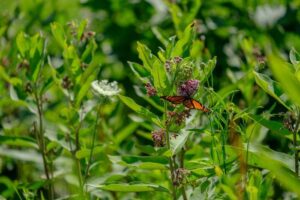
Prairie set at Kellogg Biological Station in Hickory Corners, Michigan. Note Monarch in the center part of the image.

Insecticides Linked to Dramatic Butterfly Decline in American Midwest

Substack subscription form sign up

Comments

  • Kidreadytobreed on Global warming reduces available wind energy
  • James on Global warming reduces available wind energy
  • James on Global warming reduces available wind energy
  • Booklet AI on Key to online education: Test early and often
  • Karoly Mirnics on Common Prescription Drugs May Disrupt Cholesterol Pathways in the Womb and Raise Autism Risk
© 2026 ScienceBlog.com | Follow our RSS / XML feed