Skip to content
ScienceBlog.com
  • Featured Blogs
    • EU Horizon Blog
    • ESA Tracker
    • Experimental Frontiers
    • Josh Mitteldorf’s Aging Matters
    • Dr. Lu Zhang’s Gondwanaland
    • NeuroEdge
    • NIAAA
    • SciChi
    • The Poetry of Science
    • Wild Science
  • Topics
    • Brain & Behavior
    • Earth, Energy & Environment
    • Health
    • Life & Non-humans
    • Physics & Mathematics
    • Social Sciences
    • Space
    • Technology
  • Our Substack
  • Follow Us!
    • Bluesky
    • Threads
    • FaceBook
    • Google News
    • Twitter/X
  • Contribute/Contact

carbon storage

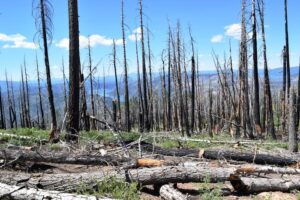
A field plot in the Sierra Nevada where researchers surveyed the effects of wildfires.

Ashes to Assets: How Harvesting Dead Wood Could Save Forests and Fight Climate Change

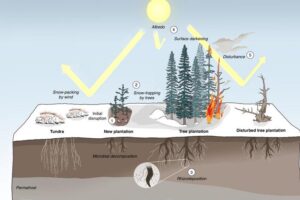
Afforestation at high latitudes disrupts soil, increasing microbial carbon decomposition and enhancing soil warming through snow trapping, while growing trees accelerate soil carbon turnover and reduce surface albedo. When a plantation is disturbed, albedo rises, but carbon stored in biomass decreases.

Arctic Tree Planting Could Actually Speed Up Global Warming, Scientists Warn

Tree in Mozambique

African Woodlands Hold Double the Carbon Previously Thought

As the ocean gets weaker, it could release more carbon from the deep ocean into the atmosphere — rather than less, as some have predicted. Credits:Image: MIT News; iStock

Ocean Circulation Slowdown Could Accelerate Climate Change, MIT Study Finds

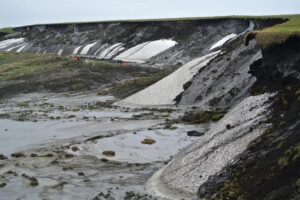
The eroding cliffs at Herschel Island. The Alfred Wegener Institute Helmholtz Center for Polar and Marine Research (AWI) commenced research in the western Canadian Arctic with the funding of the young researcher project titled Coastal Permafrost Erosion

Thawing permafrost: Not a climate tipping element, but nevertheless far-reaching impacts

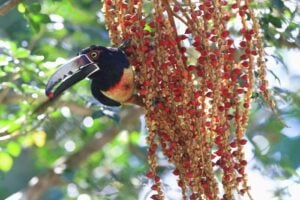
The Collared Araçari (Pteroglossus torquatus) is among the few birds that can disperse plants with large seeds and play a key role in dispersal in forests in Central and South America. It is especially important for young forests growing on abandoned land, as they bring in seeds of many different species that will help the forest regenerate a diverse tree community.

Tropical forests can’t recover naturally without fruit eating birds

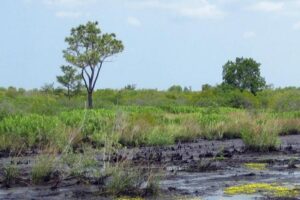
More than 70% of 2.4 million acres of evergreen shrub bogs, locally known as pocosin peatlands, were drained for agriculture and forestry along the Southeastern U.S. Coast in the last century and a half. Much of that land now lies fallow and could become an enormous carbon sink if moisture were restored.

Re-wetting peatlands could help sop up massive atmospheric carbon

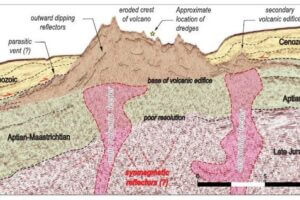
Annotated seismic cross-section of the Fontanelas volcano.

Extinct offshore volcano could store gigatons of carbon dioxide

Substack subscription form sign up

Comments

  • Karoly Mirnics on Common Prescription Drugs May Disrupt Cholesterol Pathways in the Womb and Raise Autism Risk
  • Aizen on Laziness helped lead to extinction of Homo erectus
  • Norwood johnson on Electrons in New Crystals Behave as If They Live in Four Dimensions
  • ScienceBlog.com on Hidden Geometry Could Finally Fix Quantum Computers
  • Theo Prinse on America Is Going Back to the Moon. This Time, It Plans to Stay
© 2026 ScienceBlog.com | Follow our RSS / XML feed