Skip to content
ScienceBlog.com
  • Featured Blogs
    • EU Horizon Blog
    • ESA Tracker
    • Experimental Frontiers
    • Josh Mitteldorf’s Aging Matters
    • Dr. Lu Zhang’s Gondwanaland
    • NeuroEdge
    • NIAAA
    • SciChi
    • The Poetry of Science
    • Wild Science
  • Topics
    • Brain & Behavior
    • Earth, Energy & Environment
    • Health
    • Life & Non-humans
    • Physics & Mathematics
    • Social Sciences
    • Space
    • Technology
  • Our Substack
  • Follow Us!
    • Bluesky
    • Threads
    • FaceBook
    • Google News
    • Twitter/X
  • Contribute/Contact

carbon

The inside of the DIII-D fusion vessel. The iridescent hues seen on some tiles lining the vessel come from atoms that can become lodged in the walls during plasma experiments.

The Fusion Puzzle: Why Fusion Walls Are Secretly Hoarding Vital Fuel

a backyard deck made of composite material

Scientists Develop Carbon-Negative Decking Material That Helps Combat Climate Change

Accompanying illustration of the steps involved to make green hydrogen

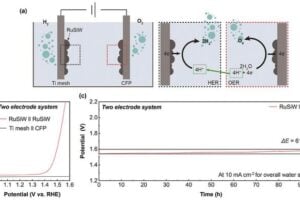
Groundbreaking discovery enables cost-effective and eco-friendly green hydrogen production

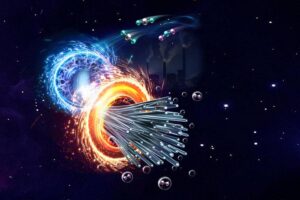
Scientists have devised a strategy for converting carbon dioxide (CO2) from the atmosphere into valuable carbon nanofibers. The process uses tandem electrocatalytic (blue ring) and thermocatalytic (orange ring) reactions to convert the CO2 (teal and silver molecules) plus water (purple and teal) into "fixed" carbon nanofibers (silver), producing hydrogen gas (H2, purple) as a beneficial byproduct. The carbon nanofibers could be used to strengthen building materials such as cement and lock away carbon for decades.

Catalytic combo converts CO2 to solid carbon nanofibers

Substack subscription form sign up

Comments

  • Monte Dale Jr on Cracks Are Appearing in the Geometric Assumption Underlying All of Modern Cosmology
  • Monte Dale Jr on Cracks Are Appearing in the Geometric Assumption Underlying All of Modern Cosmology
  • Not Buying Yer Bullshit on More Than a Third of Americans Have Lost Relationships Over Politics
  • Marco Messina on More Than a Third of Americans Have Lost Relationships Over Politics
  • Anon on Why Fructose Behaves Less Like a Calorie and More Like a Hormone
© 2026 ScienceBlog.com | Follow our RSS / XML feed