Skip to content
ScienceBlog.com
  • Featured Blogs
    • EU Horizon Blog
    • ESA Tracker
    • Experimental Frontiers
    • Josh Mitteldorf’s Aging Matters
    • Dr. Lu Zhang’s Gondwanaland
    • NeuroEdge
    • NIAAA
    • SciChi
    • The Poetry of Science
    • Wild Science
  • Topics
    • Brain & Behavior
    • Earth, Energy & Environment
    • Health
    • Life & Non-humans
    • Physics & Mathematics
    • Social Sciences
    • Space
    • Technology
  • Our Substack
  • Follow Us!
    • Bluesky
    • Threads
    • FaceBook
    • Google News
    • Twitter/X
  • Contribute/Contact

chemical reactions

A logarithmic spiral with a diameter of 500 μm, approximately half the diameter of a sewing needle.

Accidental Lab Mishap Reveals Nature’s Hidden Art

Researchers established a mechanism for modifying thermochemical processes using optical cavities. (cr: Михаил Руденко/iStock)

Scientists Find New Way to Control Chemical Reactions Using Light

Ohio State logo

Novel chemical tool aims to streamline drug-making process

quantum coherence—the ability of particles to maintain phase relationships and exist in multiple states simultaneously

Quantum Coherence Survives in Ultracold Chemical Reaction

Life requires repetition of chemical reactions. Describing the kinds of reactions and conditions required for self-sustaining repetition — called autocatalysis — could focus the search for life on other planets.

New recipes for origin of life may point way to distant, inhabited planets

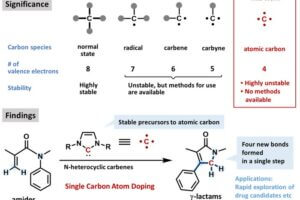
Single Carbon Atom Doping Reactions

This one-atom chemical reaction could transform drug discovery

Substack subscription form sign up

Comments

  • Karoly Mirnics on Common Prescription Drugs May Disrupt Cholesterol Pathways in the Womb and Raise Autism Risk
  • Aizen on Laziness helped lead to extinction of Homo erectus
  • Norwood johnson on Electrons in New Crystals Behave as If They Live in Four Dimensions
  • ScienceBlog.com on Hidden Geometry Could Finally Fix Quantum Computers
  • Theo Prinse on America Is Going Back to the Moon. This Time, It Plans to Stay
© 2026 ScienceBlog.com | Follow our RSS / XML feed