Skip to content
ScienceBlog.com
  • Featured Blogs
    • EU Horizon Blog
    • ESA Tracker
    • Experimental Frontiers
    • Josh Mitteldorf’s Aging Matters
    • Dr. Lu Zhang’s Gondwanaland
    • NeuroEdge
    • NIAAA
    • SciChi
    • The Poetry of Science
    • Wild Science
  • Topics
    • Brain & Behavior
    • Earth, Energy & Environment
    • Health
    • Life & Non-humans
    • Physics & Mathematics
    • Social Sciences
    • Space
    • Technology
  • Our Substack
  • Follow Us!
    • Bluesky
    • Threads
    • FaceBook
    • Google News
    • Twitter/X
  • Contribute/Contact

Chronic pain

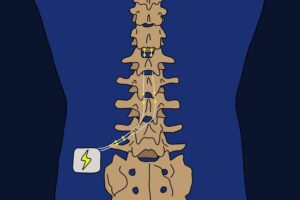
Spinal cord stimulation “is effective for some but not for other patients, and effectiveness is usually evaluated in a short trial of a few days to two weeks prior to permanent implantation. Although this trial is short, it is still an invasive and risky procedure,” says Kobe University anesthetist UENO Kyohei.

Brain scan predicts effectiveness of spinal cord surgery

Doctor and patient speaking

Confronting trauma alleviates chronic pain among older veterans

BACK PAIN spelled out in Scrabble tiles

Good and bad news for people with low back pain

Scientists use high-tech brain stimulation to make people more hypnotizable

High-tech brain stimulation makes people more hypnotizable

Predicting analgesic compounds based on a two amino acids peptide to treat chronic pain (image credit: Drs. Ulises Santiago and Samantha Perez-Miller)

New compound outperforms pain relievers

Substack subscription form sign up

Comments

  • Ashok Kumar on Machine Learning Matched the Right Lifestyle Fix to Each Depressed Patient, Doubling Remission Rates
  • Curtis Webber on The GPS-Killer? This Quantum Device ‘Feels’ Motion Like a Brain—Down to the Atomic Level
  • Ran on How the Age You First Had Sex Could Shape How You Age Decades Later
  • Sparty on How the Age You First Had Sex Could Shape How You Age Decades Later
  • Josh Mitteldorf on A Single TV Segment Sent Leucovorin Prescriptions for Autistic Children Soaring 2,000 Percent
© 2026 ScienceBlog.com | Follow our RSS / XML feed