Skip to content
ScienceBlog.com
  • Featured Blogs
    • EU Horizon Blog
    • ESA Tracker
    • Experimental Frontiers
    • Josh Mitteldorf’s Aging Matters
    • Dr. Lu Zhang’s Gondwanaland
    • NeuroEdge
    • NIAAA
    • SciChi
    • The Poetry of Science
    • Wild Science
  • Topics
    • Brain & Behavior
    • Earth, Energy & Environment
    • Health
    • Life & Non-humans
    • Physics & Mathematics
    • Social Sciences
    • Space
    • Technology
  • Our Substack
  • Follow Us!
    • Bluesky
    • Threads
    • FaceBook
    • Google News
    • Twitter/X
  • Contribute/Contact

Citizen Science

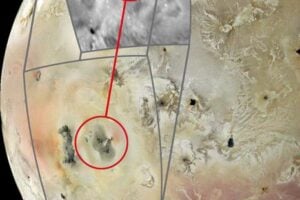
A comparison of JunoCam data from April 2024 with imagery from the Galileo mission of the same area in November 1997 (greyscale insert) reveals a new volcanic feature on the surface of Jupiter’s moon, Io.

New Volcano Discovered on Jupiter’s Moon Io in First Close-Up Images in 25 Years

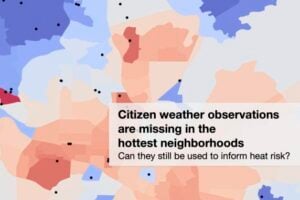
An artistic depiction of the hottest areas of Durham, North Carolina and where its weather stations are located. Note that the hottest areas of town have the fewest weather stations, leading to an underestimation of the temperatures in these areas.

For many urban residents, it’s even hotter than their weather app says

By playing Borderlands Science, a mini-game within the looter-shooter video game Borderlands 3, 4.5 million gamers have helped trace the evolutionary relationships of more than a million different kinds of bacteria that live in the human gut.

Gamers Help Scientists Make Major Breakthrough in Understanding the Human Gut

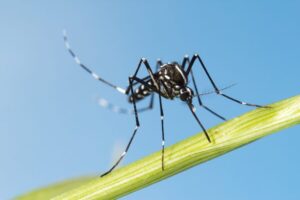
Tracking malaria and mosquitoes with the help of pregnant women and city dwellers

Petri dish of assorted plastic debris items

Plastic debris in the Arctic comes from all around the world – including Germany

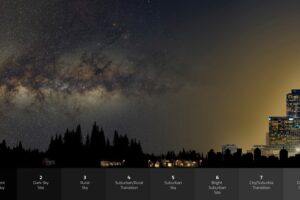
A startling analysis from Globe at Night — a citizen science program run by NSF’s NOIRLab — concludes that stars are disappearing from human sight at an astonishing rate. The study finds that, to human eyes, artificial lighting has dulled the night sky more rapidly than indicated by satellite measurements. The study showcases the unique contributions that citizen scientists can make in essential fields of research. This graphic illustrates how the greater the amount of light pollution, and therefore skyglow, the fewer the stars that are visible.

Stars disappear before our eyes, citizen scientists report

Members of the public can help astronomers observe and study the night sky through NASA’s Universe of Learning Exoplanet Watch program. Credit: NASA/Bill Dunford

NASA Wants You to Help Study Planets Around Other Stars

Substack subscription form sign up

Comments

  • Norwood johnson on Electrons in New Crystals Behave as If They Live in Four Dimensions
  • ScienceBlog.com on Hidden Geometry Could Finally Fix Quantum Computers
  • Theo Prinse on America Is Going Back to the Moon. This Time, It Plans to Stay
  • george w on Hidden Geometry Could Finally Fix Quantum Computers
  • Tom Hughes on Years of Exercise, Blood Pressure Drugs Failed to Slow Cognitive Decline in Seniors at Dementia Risk
© 2026 ScienceBlog.com | Follow our RSS / XML feed