Skip to content
ScienceBlog.com
  • Featured Blogs
    • EU Horizon Blog
    • ESA Tracker
    • Experimental Frontiers
    • Josh Mitteldorf’s Aging Matters
    • Dr. Lu Zhang’s Gondwanaland
    • NeuroEdge
    • NIAAA
    • SciChi
    • The Poetry of Science
    • Wild Science
  • Topics
    • Brain & Behavior
    • Earth, Energy & Environment
    • Health
    • Life & Non-humans
    • Physics & Mathematics
    • Social Sciences
    • Space
    • Technology
  • Our Substack
  • Follow Us!
    • Bluesky
    • Threads
    • FaceBook
    • Google News
    • Twitter/X
  • Contribute/Contact

climate change

As Europe goes green, number crunchers map the ripple effects

Scientists believe dust launched from the moon could reduce solar radiation enough to lessen the impact of climate change

Can space dust slow global warming?

Man wading in thigh hiigh water

Future flooding to wreck economies of developing nations

The interference of climate change with the planet's water cycle is a well established fact. New analyses suggest that in many places, runoff responds more sensitively than previously assumed.

Water crises due to climate change: more severe than previously thought

Redwood forests such as this one in California's Humboldt County are key components of the state's climate change mitigation efforts, but UCI researchers suggest that ongoing greenhouse gas emissions may limit the ability of trees to remove carbon dioxide from the atmosphere.

Forest trees find a new watery ‘sweet spot’ when CO2 is high

Wetland

Small isolated wetlands are pollution-catching powerhouses

Elephants

Gardeners of the Forest: Science Poetry Friday!

“It would be really exciting to think a little bit more creatively about how we can as a community get ready for that kind of whiplash of different challenges and different extremes that we might not be anticipating in detail,” said Jenny Suckale, an assistant professor of geophysics in the Stanford Doerr School of Sustainability, during a Jan. 18 webinar. (Image credit: Getty Images)

What we can learn from California’s deadly storms

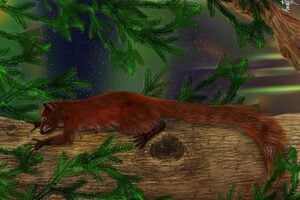
Artist's reconstruction of Ignacius dawsonae surviving six months of winter darkness in the extinct warm temperate ecosystem of Ellesmere Island, Arctic Canada.

Fossils show near-primates were cool with colder climate

A selection from the zooplankton collection at the NTNU University Museum. The collection is safely stored in anticipation of future researchers, who may find it useful.

Just one degree can change a species

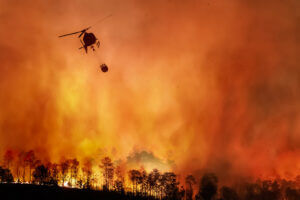
Major fire with helicopter dropping water

Unnecessary Deaths by Fire

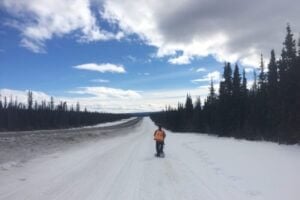
Squirrel researcher walking along the Alaska Highway in the Yukon, Canada. Image credit: Ben Dantzer

Squirrels that gamble win big when it comes to evolutionary fitness

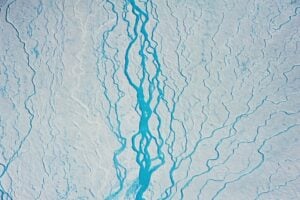
Rivers of meltwater (Greenland's ice sheet)

Global warming reaches central Greenland

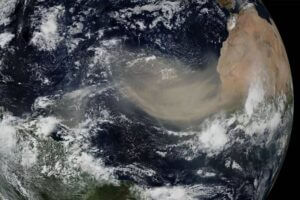
A visualization from space of the “Godzilla” dust storm on June 18, 2020, when desert dust traveled from the Sahara to North America. A UCLA study finds that an increase in microscopic dust in the atmosphere has concealed the full extent of greenhouse gases’ potential for warming the planet.

Increased atmospheric dust is masking greenhouse gas warming effect

Older posts
Newer posts
← Previous Page1 … Page24 Page25 Page26 Page27 Next →
Substack subscription form sign up

Comments

  • Anon on Why Fructose Behaves Less Like a Calorie and More Like a Hormone
  • Mark Mellinger on Living Plastic Can Self-Destruct on Command
  • Marie Feret on The Silent Frequency That Makes Old Buildings Feel Haunted
  • Dax on The Silent Frequency That Makes Old Buildings Feel Haunted
  • Karoly Mirnics on Common Prescription Drugs May Disrupt Cholesterol Pathways in the Womb and Raise Autism Risk
© 2026 ScienceBlog.com | Follow our RSS / XML feed