Skip to content
ScienceBlog.com
  • Featured Blogs
    • EU Horizon Blog
    • ESA Tracker
    • Experimental Frontiers
    • Josh Mitteldorf’s Aging Matters
    • Dr. Lu Zhang’s Gondwanaland
    • NeuroEdge
    • NIAAA
    • SciChi
    • The Poetry of Science
    • Wild Science
  • Topics
    • Brain & Behavior
    • Earth, Energy & Environment
    • Health
    • Life & Non-humans
    • Physics & Mathematics
    • Social Sciences
    • Space
    • Technology
  • Our Substack
  • Follow Us!
    • Bluesky
    • Threads
    • FaceBook
    • Google News
    • Twitter/X
  • Contribute/Contact

climate science

clouds

German Scientists Launch Ambitious Project to Capture Clouds in 3D

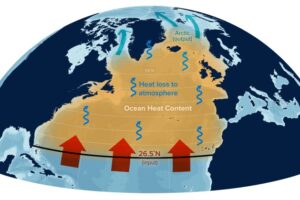
To reconstruct the AMOC, researchers looked at air-sea heat fluxes, which is the exchange of heat from the ocean to the atmosphere. When the AMOC is stronger, more heat is released from the ocean to the atmosphere over the North Atlantic.

Key Atlantic Ocean Current Remains Stable, Defying Previous Concerns

Winter coastal landscape with floating ice fragments on still cold blue water. Gulf of Finland, Russia

Not the day after tomorrow: Why we can’t predict the timing of climate tipping points

The flux system that collected data for the study is now being used on new research ship the RRS Sir David Attenborough (pictured).

Southern Ocean absorbing more CO2 than previously thought

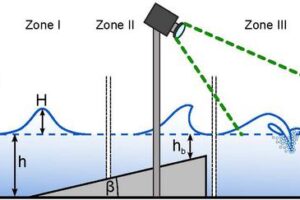
A wave channel experiment used a zoom lens camera and a custom Python script to process imagery of four different zones: wave generation, shoaling and breaking, air detained by a plunging jet of water, and air trapped at bores where water level rises rapidly. The study provided essential insights into the physical and chemical impacts of microplastics at the air-water interface.

Microplastic pollution increases sea foam height and stability

Ocean

Scientists question effectiveness of nature-based CO2 removal using the ocean

Ohio State logo

Tropical ice cores offer deeper insights into Earth’s temperature record

Ohio State logo

How mountains affect El Niño-induced winter precipitation

Ohio State logo

Ice cores from Earth’s highest tropical peak provide insight into climate variability

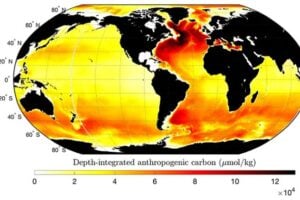
Map of depth-integrated anthropogenic carbon Credit: Laura Cimoli/GLODAP

Giant underwater waves affect the ocean’s ability to store carbon

Illustration of critters impacted by Earth's warmth

Before global warming, was the Earth cooling down or heating up?

Bleak windswept view from the tundra

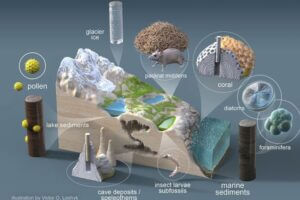
An intimate look at Earth’s last 11,000 summers and winters

Substack subscription form sign up

Comments

  • Karoly Mirnics on Common Prescription Drugs May Disrupt Cholesterol Pathways in the Womb and Raise Autism Risk
  • Aizen on Laziness helped lead to extinction of Homo erectus
  • Norwood johnson on Electrons in New Crystals Behave as If They Live in Four Dimensions
  • ScienceBlog.com on Hidden Geometry Could Finally Fix Quantum Computers
  • Theo Prinse on America Is Going Back to the Moon. This Time, It Plans to Stay
© 2026 ScienceBlog.com | Follow our RSS / XML feed