Skip to content
ScienceBlog.com
  • Featured Blogs
    • EU Horizon Blog
    • ESA Tracker
    • Experimental Frontiers
    • Josh Mitteldorf’s Aging Matters
    • Dr. Lu Zhang’s Gondwanaland
    • NeuroEdge
    • NIAAA
    • SciChi
    • The Poetry of Science
    • Wild Science
  • Topics
    • Brain & Behavior
    • Earth, Energy & Environment
    • Health
    • Life & Non-humans
    • Physics & Mathematics
    • Social Sciences
    • Space
    • Technology
  • Our Substack
  • Follow Us!
    • Bluesky
    • Threads
    • FaceBook
    • Google News
    • Twitter/X
  • Contribute/Contact

Cognitive decline

Woman in a yoga position meditating

Yoga gives cognitive benefits to older women at risk of Alzheimer’s

An illustration depicting a diverse group of adults engaged in conversation, emphasizing various speech speeds.

May I have a quick word? Study shows talking faster is linked to better brain health as we age

artistic illustration of young woman looking confused

Polycystic ovary syndrome tied to memory, thinking problems

brain illustration

Bariatric surgery may slow cognitive decline for people with obesity

Man smoking. Unsplash

Smoking causes brain shrinkage

Mediterranean diet

Following a Mediterranean diet reduces the risk of cognitive decline in older people

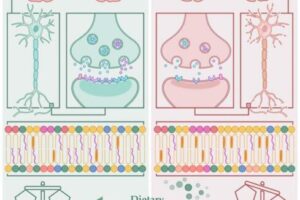
The process of brain aging is distinguished by a gradual deterioration in the functioning of neurons, which can be attributed to an imbalance in the cellular and molecular mechanisms governing synaptic plasticity. Synapses are enriched with various lipid species including phosphatidylcholine, phosphatidylethanolamine, phosphatidylserine, sphingolipids, and some other less abundant components. Those components are altered in aging brain, could affect brain functions, including structural development, nerve-impulse transmission, neurogenesis, synaptogenesis and myelin formation. Dietary phospholipid intervention could prevent brain aging by maintaining lipid homeostasis and enhancing synaptic plasticity.

Dietary fat as potential strategy to prevent brain aging

A study led by Stanford Medicine researchers provides insight into aging of the brain. Adobe Stock/kulkann

Researchers identifies gene ‘fingerprint’ for brain aging

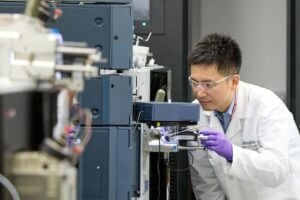
Kanta Horie, PhD, works with a mass spectrometer that he uses to measure protein levels in cerebrospinal fluid samples. Horie and colleagues at Washington University School of Medicine in St. Louis and Lund University in Sweden have discovered that a form of the protein tau in the cerebrospinal fluid known as MTBR-tau243 can be used to track the progression of Alzheimer's disease and could speed drug development.

Tau-based biomarker tracks Alzheimer’s progression

brain graphic with brainwaves emanating from the blue drawing

An early predictor of cognitive decline in Parkinson’s disease

A boxer by his trade and he carries a reminder of every glove that laid him out or cut him til he cried out in his anger and his shame, I am leaving, I am leaving but the fighter still remained.

Among pro fighters, new criteria can ID who may develop CTE

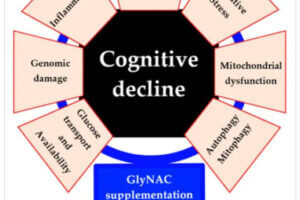
Model of cognitive decline and the effect of GlyNac

GlyNAC Supplementation May Help Reverse Cognitive Decline in Aging

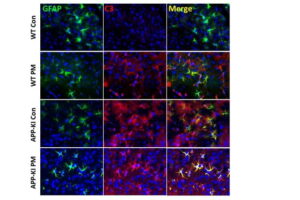
The study examined the brains of two types of mice: normal mice and mice with Alzheimer's disease. The mice were exposed to purified air or very small particles in the air. The researchers wanted to see if there were any changes in a type of brain cell called astrocytes. The astrocytes were stained green in the images, and the harmful and activated astrocytes appeared red. The merged images showed that the harmful astrocytes were more prevalent in the brains of the Alzheimer's mice exposed to the small particles. This suggests that exposure to these particles can activate harmful astrocytes in the brains of mice with Alzheimer's disease.

Traffic pollution weakens brain function

The day’s catch Photo Credit: MICHAEL GURVEN

Too much food tied to brain aging

Older posts
Newer posts
← Previous Page1 Page2 Page3 Page4 Next →
Substack subscription form sign up

Comments

  • Karoly Mirnics on Common Prescription Drugs May Disrupt Cholesterol Pathways in the Womb and Raise Autism Risk
  • Aizen on Laziness helped lead to extinction of Homo erectus
  • Norwood johnson on Electrons in New Crystals Behave as If They Live in Four Dimensions
  • ScienceBlog.com on Hidden Geometry Could Finally Fix Quantum Computers
  • Theo Prinse on America Is Going Back to the Moon. This Time, It Plans to Stay
© 2026 ScienceBlog.com | Follow our RSS / XML feed