Skip to content
ScienceBlog.com
  • Featured Blogs
    • EU Horizon Blog
    • ESA Tracker
    • Experimental Frontiers
    • Josh Mitteldorf’s Aging Matters
    • Dr. Lu Zhang’s Gondwanaland
    • NeuroEdge
    • NIAAA
    • SciChi
    • The Poetry of Science
    • Wild Science
  • Topics
    • Brain & Behavior
    • Earth, Energy & Environment
    • Health
    • Life & Non-humans
    • Physics & Mathematics
    • Social Sciences
    • Space
    • Technology
  • Our Substack
  • Follow Us!
    • Bluesky
    • Threads
    • FaceBook
    • Google News
    • Twitter/X
  • Contribute/Contact

cognitive function

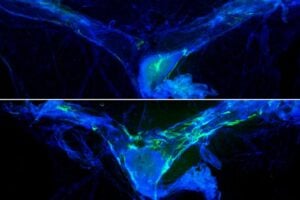
lymph vessels

Aging Brain’s Trash Collection System Holds Key to Memory Restoration

kids on phones

Two-Week Digital Detox Makes Brain Feel 10 Years Younger, Study Finds

sickle cell blood cells

Sickle Cell Disease Ages Brain Years Ahead of Time

Keck School of Medicine of USC researchers found that a higher number of small HDL particles in spinal fluid samples was associated with two key indicators that the particles might have a protective effect against Alzheimer’s disease. (Illustration iStock)

Small Particles of ‘Good’ Cholesterol May Help Protect Brain Health

Elderly men speaking

70 Is the New 60: Study Reveals Remarkable Gains in Aging Population’s Health

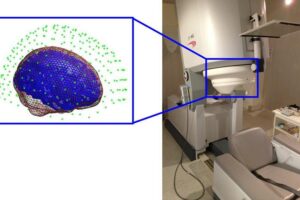
Magnetoencephalography (MEG) equipment used to study brain activity. Resting-state MEG data was collected before and after the season from 91 high school football players, including 10 diagnosed with a concussion. MEG measures magnetic fields generated by the brain’s electrical currents, offering insights into neural activity.

Brain blows slow thinking of high school football players

Short-term menopausal hormone therapy has no long-term cognitive impact

Early Menopause Hormone Therapy Shows No Long-Term Impact on Memory, Thinking

homer in space

Space Station Study Shows Astronauts Process Tasks More Slowly, But Maintain Accuracy

ziziphus jujuba

Ancient Chinese Seed Shows Surprising Power to Prevent and Reverse Dementia in Mice

woman running

Aerobic Exercise May Help Combat “Chemo Brain” in Breast Cancer Patients

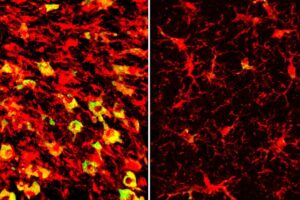
Lipid deposits (green) in brain immune cells (red) from mice with Alzheimer’s-like disease all but disappear (right) after the mice are treated with an experimental drug. Researchers at Washington University School of Medicine in St. Louis have found that a form of cholesterol known as cholesteryl esters builds up in the brains of mice with Alzheimer’s-like disease, and that clearing out the cholesteryl esters helps prevent brain damage and behavioral changes.

Quality, not amount, of ‘good’ cholesterol contribute to first sign of Alzheimer’s in women

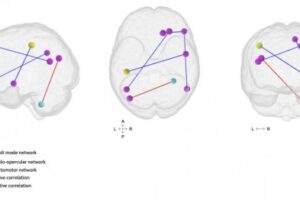
Restless sleep correlates with lower connectivity between the default mode network nodes, and default mode network and somatomotor network nodes. The default mode network is a group of brain regions that are active when we are at rest, not focusing on any specific task. The somatomotor network involves brain regions that are responsible for controlling movement and processing sensations from the body, such as touch and physical feedback.

Long-Term Brain Study Reveals Lasting Effects of Daily Activities on Cognition

Football player

1 in 3 Former NFL Players Believe They Have CTE, Linked to Higher Suicide Risk

Vaping man on couch

Vaping Linked to Cognitive Decline in College Students, New Study Reveals

Older posts
Page1 Page2 Page3 Next →
Substack subscription form sign up

Comments

  • Kidreadytobreed on Global warming reduces available wind energy
  • James on Global warming reduces available wind energy
  • James on Global warming reduces available wind energy
  • Booklet AI on Key to online education: Test early and often
  • Karoly Mirnics on Common Prescription Drugs May Disrupt Cholesterol Pathways in the Womb and Raise Autism Risk
© 2026 ScienceBlog.com | Follow our RSS / XML feed