Skip to content
ScienceBlog.com
  • Featured Blogs
    • EU Horizon Blog
    • ESA Tracker
    • Experimental Frontiers
    • Josh Mitteldorf’s Aging Matters
    • Dr. Lu Zhang’s Gondwanaland
    • NeuroEdge
    • NIAAA
    • SciChi
    • The Poetry of Science
    • Wild Science
  • Topics
    • Brain & Behavior
    • Earth, Energy & Environment
    • Health
    • Life & Non-humans
    • Physics & Mathematics
    • Social Sciences
    • Space
    • Technology
  • Our Substack
  • Follow Us!
    • Bluesky
    • Threads
    • FaceBook
    • Google News
    • Twitter/X
  • Contribute/Contact

cognitive performance

homer in space

Space Station Study Shows Astronauts Process Tasks More Slowly, But Maintain Accuracy

25-year study reveals key factors in healthy brain aging and cognitive performance

25-Year Study Reveals Childhood Intelligence Shapes Brain Health in Old Age

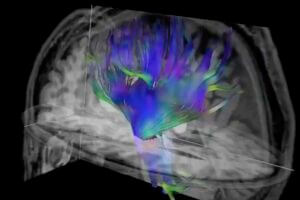
Diffusion tensor imaging, an MRI technique, of the brain.

Soccer heading linked to measurable decline in brain function

Woman listening to music on over the ear headphones

People’s everyday pleasures may improve cognitive arousal and performance

football players clashing on field

Concussions take long toll on NFL player cognition

Chess players perform worse when air pollution increases, according to research co-authored by MIT economist Juan Palacios. Credits:Image: Jose-Luis Olivares, MIT, with figures from iStockphoto

Chess players perform worse in air pollution

A zebra finch undertakes a cognition assay as part of the study.

City noise affects the color of songbirds’ beaks

Substack subscription form sign up

Comments

  • Simon on A New Theory Says DMT Entities Might Be Real, and Proposes How to Test It
  • Sue Ann Hayes on Hidden Nuclear Protein Fuels Pancreatic Cancer’s Deadly Aggression
  • Curtis Webber on The GPS-Killer? This Quantum Device ‘Feels’ Motion Like a Brain—Down to the Atomic Level
  • Ran on How the Age You First Had Sex Could Shape How You Age Decades Later
  • Sparty on How the Age You First Had Sex Could Shape How You Age Decades Later
© 2026 ScienceBlog.com | Follow our RSS / XML feed