Skip to content
ScienceBlog.com
  • Featured Blogs
    • EU Horizon Blog
    • ESA Tracker
    • Experimental Frontiers
    • Josh Mitteldorf’s Aging Matters
    • Dr. Lu Zhang’s Gondwanaland
    • NeuroEdge
    • NIAAA
    • SciChi
    • The Poetry of Science
    • Wild Science
  • Topics
    • Brain & Behavior
    • Earth, Energy & Environment
    • Health
    • Life & Non-humans
    • Physics & Mathematics
    • Social Sciences
    • Space
    • Technology
  • Our Substack
  • Follow Us!
    • Bluesky
    • Threads
    • FaceBook
    • Google News
    • Twitter/X
  • Contribute/Contact

communication system

Postdoctoral fellow Thomas Keating at Tema T – Technology and Social Change at Linköping University, Sweden.

Sweden’s 100,000-Year Nuclear Puzzle: Scientists Develop Strategy to Preserve Crucial Waste Repository Information


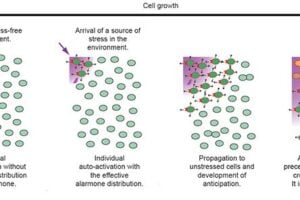
A (light green) bacterial cell detects a source of stress and becomes activated (dark green). It then produces alarmones (depicted as red triangles) and can transmit them to neighboring cells via cell-to-cell contact (black arrows). As the source of stress arrives, the percentage of activated cells increases, converting unstressed neighboring cells and triggering the stress response mechanism.

Bacteria’s Secret ‘Alarm System’ Against Antibiotics Uncovered

Substack subscription form sign up

Comments

  • Brunette Keller on How New Herpes Drugs Jam a Virus’s Replication Engine
  • Aizen on Laziness helped lead to extinction of Homo erectus
  • Norwood johnson on Electrons in New Crystals Behave as If They Live in Four Dimensions
  • ScienceBlog.com on Hidden Geometry Could Finally Fix Quantum Computers
  • Theo Prinse on America Is Going Back to the Moon. This Time, It Plans to Stay
© 2026 ScienceBlog.com | Follow our RSS / XML feed