Skip to content
ScienceBlog.com
  • Featured Blogs
    • EU Horizon Blog
    • ESA Tracker
    • Experimental Frontiers
    • Josh Mitteldorf’s Aging Matters
    • Dr. Lu Zhang’s Gondwanaland
    • NeuroEdge
    • NIAAA
    • SciChi
    • The Poetry of Science
    • Wild Science
  • Topics
    • Brain & Behavior
    • Earth, Energy & Environment
    • Health
    • Life & Non-humans
    • Physics & Mathematics
    • Social Sciences
    • Space
    • Technology
  • Our Substack
  • Follow Us!
    • Bluesky
    • Threads
    • FaceBook
    • Google News
    • Twitter/X
  • Contribute/Contact

Computer Science

A generated image showing a computer processor with a magnifying glass revealing the Path History Register and branch predictor, along with a warning sign indicating a security vulnerability

Researchers Uncover New High-Precision Attacks Targeting Billions of Intel and AMD Processors

An AI humanoid glowing green

AI’s Energy Footprint Can Be Cut by 70-80% Without Compromising Performance

light rays on a dark blue background

Scientists make Python 1000x faster

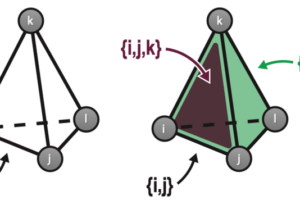
In the classical Hopfield network (left), each neuron (I, j, k, l) is connected to the others in a pairwise manner. In the modified network made by Mr Burns and Professor Fukai, sets of three or more neurons can connect simultaneously.

What makes a neural network remember?

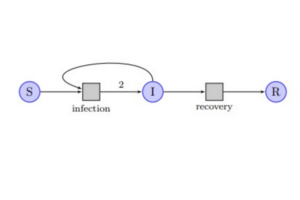
A simple version of a Petri net for COVID infection. The starting point is a non-infected person. “S” denotes “susceptible”. Contact with an infected person (“I”) is an event which leads to two persons being infected. Later another event will happen, removing a person from the group of infected. Here, “R” denotes “recovered” which in this context could be either cured or dead. Either outcome would remove the person from the infected group.

COVID calculations spur solution to vexing computer science problem

Substack subscription form sign up

Comments

  • Norwood johnson on Electrons in New Crystals Behave as If They Live in Four Dimensions
  • ScienceBlog.com on Hidden Geometry Could Finally Fix Quantum Computers
  • Theo Prinse on America Is Going Back to the Moon. This Time, It Plans to Stay
  • george w on Hidden Geometry Could Finally Fix Quantum Computers
  • Tom Hughes on Years of Exercise, Blood Pressure Drugs Failed to Slow Cognitive Decline in Seniors at Dementia Risk
© 2026 ScienceBlog.com | Follow our RSS / XML feed