Skip to content
ScienceBlog.com
  • Featured Blogs
    • EU Horizon Blog
    • ESA Tracker
    • Experimental Frontiers
    • Josh Mitteldorf’s Aging Matters
    • Dr. Lu Zhang’s Gondwanaland
    • NeuroEdge
    • NIAAA
    • SciChi
    • The Poetry of Science
    • Wild Science
  • Topics
    • Brain & Behavior
    • Earth, Energy & Environment
    • Health
    • Life & Non-humans
    • Physics & Mathematics
    • Social Sciences
    • Space
    • Technology
  • Our Substack
  • Follow Us!
    • Bluesky
    • Threads
    • FaceBook
    • Google News
    • Twitter/X
  • Contribute/Contact

Conservation Biology

Recent research led by Washington State University (WSU) offers hope for at-risk butterflies, revealing that their populations fared better when their habitats were actively managed. The study examined 31 at-risk butterfly species across the U.S., all of which are experiencing rapid declines due to habitat loss, climate change, and pesticide use.

Human Intervention Boosts Survival Chances for At-Risk Butterflies

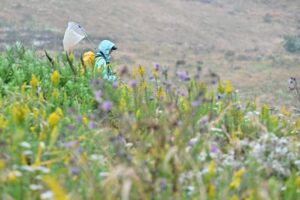
Bee

Bees likely evolved from ancient supercontinent, earlier than suspected

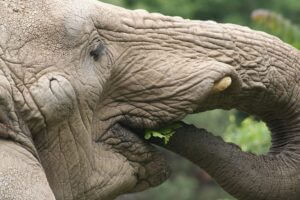
Elephant eating. Pixabay

Like us, elephants vary their evening meal

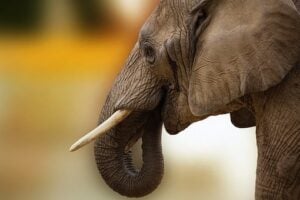
Elephant with ivory tusk

Study finds public opinion on ivory in China shifts over two decades

Substack subscription form sign up

Comments

  • Booklet AI on Key to online education: Test early and often
  • Karoly Mirnics on Common Prescription Drugs May Disrupt Cholesterol Pathways in the Womb and Raise Autism Risk
  • Aizen on Laziness helped lead to extinction of Homo erectus
  • Norwood johnson on Electrons in New Crystals Behave as If They Live in Four Dimensions
  • ScienceBlog.com on Hidden Geometry Could Finally Fix Quantum Computers
© 2026 ScienceBlog.com | Follow our RSS / XML feed