Skip to content
ScienceBlog.com
  • Featured Blogs
    • EU Horizon Blog
    • ESA Tracker
    • Experimental Frontiers
    • Josh Mitteldorf’s Aging Matters
    • Dr. Lu Zhang’s Gondwanaland
    • NeuroEdge
    • NIAAA
    • SciChi
    • The Poetry of Science
    • Wild Science
  • Topics
    • Brain & Behavior
    • Earth, Energy & Environment
    • Health
    • Life & Non-humans
    • Physics & Mathematics
    • Social Sciences
    • Space
    • Technology
  • Our Substack
  • Follow Us!
    • Bluesky
    • Threads
    • FaceBook
    • Google News
    • Twitter/X
  • Contribute/Contact

conservation

The Tale of Two Skates: How a Genetic Twist Solved a Century-Old Mystery

The Tale of Two Skates: How a Genetic Twist Solved a Century-Old Mystery

1 in 5 butterflies have disappeared in the United States since the year 2000, according to research featuring faculty at Binghamton University, State University of New York.

20% of Butterflies in the U.S. Have Disappeared Since 2000

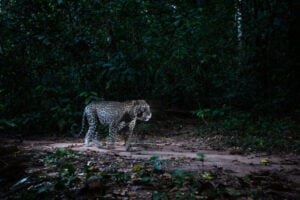
leopard at night

Hidden Predators Revealed: Rare Glimpse into Congo’s Secret Forest World

The Chinese Pangolin is one of two species that researchers have now provided high-quality, nearly gapless genome sequences and analyzed these for information to aid in conservation of these animals. The Chinese Pangolin and the Malayan Pangolin, also studied here, are listed as critically endangered on the Red List of the IUCN.

World Pangolin Day celebrated with new genomes to aid the world’s most trafficked animal

Ohio State logo

New technology lights way for accelerating coral reef restoration

nursehound shark

Shark Meat Sales Rise as Mediterranean Protection Efforts Fall Short

Parma wallabies at a private enclosure at Yengo, Mount Wilson in New South Wales. Photo: Professor George Wilson/ANU

Private Sanctuaries Could Hold Key to Saving Vulnerable Wallaby

Giraffe family

Steep Slopes Pose Unexpected Challenge for Giraffe Conservation

Illustration of a person walking down a forest path

What is a unit of nature? Challenges in establishing biodiversity credit market

female Bonobo

Rangers and Ancient Forests Shield Earth’s Largest Wild Bonobo Population

The Florida panther’s population reached a dangerously low number of only 30 panthers in the 1970s and 1980s, which led to inbreeding and producing offspring with genetic problems. Photo credit: Adobe Stock

Panthers Show Resilience Against Emerging Brain Disease Threat

As several families cross the Ewaso Ngiro River, a female elephant responds to her calf’s distress call. Credit: George Wittemyer/Colorado State University

53-Year Study Shows 90% Drop in Forest Elephant Numbers

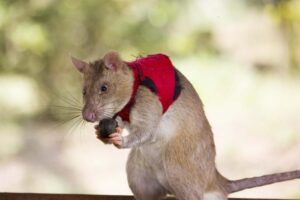
Giant rats could soon fight illegal wildlife trade by sniffing out elephant tusk and rhino horn

Giant rats could soon fight illegal wildlife trade by sniffing out elephant tusk and rhino horn

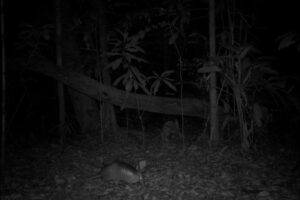
Armadillo. Armadillos are lunar phobic and less active when there is more lunar/moon illumination. Taken by a wildlife camera.

Moon Phases Influence Tropical Forest Mammals’ Behavior, Study Finds

Older posts
Page1 Page2 … Page8 Next →
Substack subscription form sign up

Comments

  • Marco Messina on More Than a Third of Americans Have Lost Relationships Over Politics
  • Anon on Why Fructose Behaves Less Like a Calorie and More Like a Hormone
  • Mark Mellinger on Living Plastic Can Self-Destruct on Command
  • Marie Feret on The Silent Frequency That Makes Old Buildings Feel Haunted
  • Dax on The Silent Frequency That Makes Old Buildings Feel Haunted
© 2026 ScienceBlog.com | Follow our RSS / XML feed