Skip to content
ScienceBlog.com
  • Featured Blogs
    • EU Horizon Blog
    • ESA Tracker
    • Experimental Frontiers
    • Josh Mitteldorf’s Aging Matters
    • Dr. Lu Zhang’s Gondwanaland
    • NeuroEdge
    • NIAAA
    • SciChi
    • The Poetry of Science
    • Wild Science
  • Topics
    • Brain & Behavior
    • Earth, Energy & Environment
    • Health
    • Life & Non-humans
    • Physics & Mathematics
    • Social Sciences
    • Space
    • Technology
  • Our Substack
  • Follow Us!
    • Bluesky
    • Threads
    • FaceBook
    • Google News
    • Twitter/X
  • Contribute/Contact

cosmic rays

A star and a black hole orbit each other closely: mass from the star is captured by the black hole. As a consequence of this, a pair of jets launch away from the black hole.

Tiny Black Holes Pack a Cosmic Punch: Scientists Spot New Particle Accelerators in Space

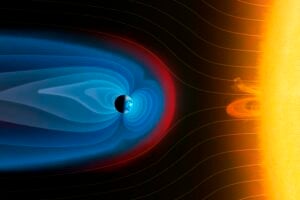
Illustration of Earth’s bow shock and magnetic field environment. Particles coming from the Sun interact with Earth’s magnetic field forming a shock wave (called bow shock – shown in red).

Scientists Solve Mystery of How Space Particles Reach Such Extreme Speeds

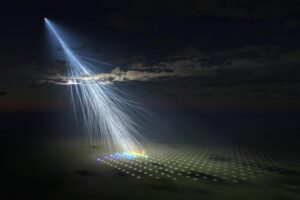
Artist’s illustration of the extremely energetic cosmic ray observed by a surface detector array of the Telescope Array experiment, named “Amaterasu particle.”

Mysterious Cosmic Ray Defies Origins and Energies

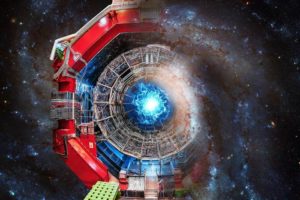
Illustration of antihelium annihilation in the ALICE detector at CERN as well as in the universe.

Anti-helium nuclei carry messages from the depths of the galaxy

Substack subscription form sign up

Comments

  • Marco Messina on More Than a Third of Americans Have Lost Relationships Over Politics
  • Anon on Why Fructose Behaves Less Like a Calorie and More Like a Hormone
  • Mark Mellinger on Living Plastic Can Self-Destruct on Command
  • Marie Feret on The Silent Frequency That Makes Old Buildings Feel Haunted
  • Dax on The Silent Frequency That Makes Old Buildings Feel Haunted
© 2026 ScienceBlog.com | Follow our RSS / XML feed