Skip to content
ScienceBlog.com
  • Featured Blogs
    • EU Horizon Blog
    • ESA Tracker
    • Experimental Frontiers
    • Josh Mitteldorf’s Aging Matters
    • Dr. Lu Zhang’s Gondwanaland
    • NeuroEdge
    • NIAAA
    • SciChi
    • The Poetry of Science
    • Wild Science
  • Topics
    • Brain & Behavior
    • Earth, Energy & Environment
    • Health
    • Life & Non-humans
    • Physics & Mathematics
    • Social Sciences
    • Space
    • Technology
  • Our Substack
  • Follow Us!
    • Bluesky
    • Threads
    • FaceBook
    • Google News
    • Twitter/X
  • Contribute/Contact

cultural heritage

View of Palmyra with the Temple of Bel, Syria

80% of Ancient Wonder Palmyra Destroyed In Wake of Assad Ouster

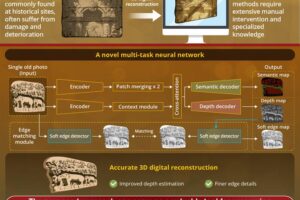
The innovative multi-task neural network achieves simultaneous depth estimation and soft-edge detection in a single network, producing clear 3D reconstructed images of relief-type cultural heritage objects from a single old photo.

AI Brings Ancient Temple Carvings Back to Life Using Historical Photos

Italian winemaking town sets example for EU rural revival

Dance and games offer glimpses of life – and death – in ancient Italy

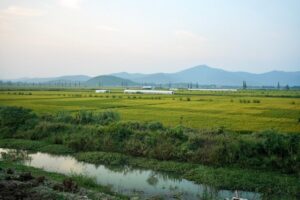
Polders in the Tai Lake Basin, China, 2022. Polders are an important part of China's water heritage, but they are disappearing

Why polders are an important part of China’s water heritage

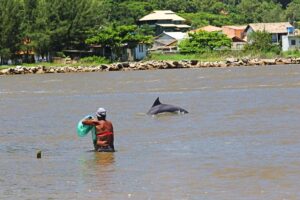
Traditional cooperative fishing between Lahille's bottlenose dolphins and artisanal net-casting fishers in Laguna, Brazil.

Fishing in synchrony brings mutual benefits for dolphins and people

Substack subscription form sign up

Comments

  • Sue Ann Hayes on Hidden Nuclear Protein Fuels Pancreatic Cancer’s Deadly Aggression
  • Curtis Webber on The GPS-Killer? This Quantum Device ‘Feels’ Motion Like a Brain—Down to the Atomic Level
  • Ran on How the Age You First Had Sex Could Shape How You Age Decades Later
  • Sparty on How the Age You First Had Sex Could Shape How You Age Decades Later
  • Josh Mitteldorf on A Single TV Segment Sent Leucovorin Prescriptions for Autistic Children Soaring 2,000 Percent
© 2026 ScienceBlog.com | Follow our RSS / XML feed