Skip to content
ScienceBlog.com
  • Featured Blogs
    • EU Horizon Blog
    • ESA Tracker
    • Experimental Frontiers
    • Josh Mitteldorf’s Aging Matters
    • Dr. Lu Zhang’s Gondwanaland
    • NeuroEdge
    • NIAAA
    • SciChi
    • The Poetry of Science
    • Wild Science
  • Topics
    • Brain & Behavior
    • Earth, Energy & Environment
    • Health
    • Life & Non-humans
    • Physics & Mathematics
    • Social Sciences
    • Space
    • Technology
  • Our Substack
  • Follow Us!
    • Bluesky
    • Threads
    • FaceBook
    • Google News
    • Twitter/X
  • Contribute/Contact

deep learning

abstract illustration of M S in human body

AI tool can track effectiveness of multiple sclerosis treatments

An oil well in Oklahoma.

AI Helps Track Down Lost Oil Wells Using Historical Maps

Atmospheric blocking events can be associated with extreme heat waves, such as in Europe in 2023.

Deep learning illuminates atmospheric blocking events of past, future

Contour plots (A, C, E, G) compare the input conditions, traditional finite difference method solutions, and the solutions generated by model B3, the most advanced model in the study. Velocity profiles (B, D, F, H) display detailed velocity information at specific cross-sections of the simulation domain.

Deep Learning Accelerates Fluid Dynamics Simulations, Solving Complex Equations 1,000 Times Faster

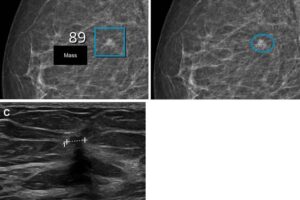
Breast scan

AI detects more breast cancers with fewer false positives

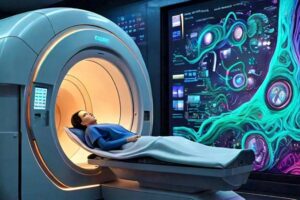
A computer-generated image showing a compact, low-power MRI scanner with a patient inside, surrounded by visual representations of deep learning algorithms and data. The image conveys the concept of accessible, deep learning-powered MRI technology

Low-Power MRI Scanners Powered by Deep Learning Could Revolutionize Accessibility

An illustration depicting a smartwatch displaying a heart rate graph, with an alert indicating an upcoming atrial fibrillation episode

AI Model Predicts Atrial Fibrillation 30 Minutes Before Onset

Ohio State logo

AI can use human perception to help tune out noisy audio

Ohio State logo

Using AI to pinpoint hidden sources of clean energy underground

Crabs

AI-powered crab gender identification can revolutionize fishery management and conservation

A machine-learning technique developed by researchers from MIT and elsewhere enables deep learning models, like those that underlie AI chatbots or smart keyboards, to efficiently and continuously learn from new user data directly on an edge device like a smartphone. Credits:Image: MIT News

Technique enables AI on edge devices to keep learning over time

Heart illustration. Pixabay

AI Tool Detects Hidden Heart Disorders From ECG Photos

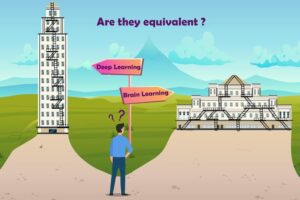
Figure: Scheme of Deep Machine Learning consisting of many layers (left) vs. Shallow Brain Learning consisting of a few layers with enlarged width (right). For more detail see https://www.nature.com/articles/s41598-023-32559-8

Is Deep Learning a necessary ingredient for Artificial Intelligence?

The Grainger College of Engineering at the University of Illinois Urbana-Champaign

OpenAI’s ChatGPT costs $100k per day to run; accelerators could help

Older posts
Page1 Page2 Next →
Substack subscription form sign up

Comments

  • Karoly Mirnics on Common Prescription Drugs May Disrupt Cholesterol Pathways in the Womb and Raise Autism Risk
  • Aizen on Laziness helped lead to extinction of Homo erectus
  • Norwood johnson on Electrons in New Crystals Behave as If They Live in Four Dimensions
  • ScienceBlog.com on Hidden Geometry Could Finally Fix Quantum Computers
  • Theo Prinse on America Is Going Back to the Moon. This Time, It Plans to Stay
© 2026 ScienceBlog.com | Follow our RSS / XML feed