Skip to content
ScienceBlog.com
  • Featured Blogs
    • EU Horizon Blog
    • ESA Tracker
    • Experimental Frontiers
    • Josh Mitteldorf’s Aging Matters
    • Dr. Lu Zhang’s Gondwanaland
    • NeuroEdge
    • NIAAA
    • SciChi
    • The Poetry of Science
    • Wild Science
  • Topics
    • Brain & Behavior
    • Earth, Energy & Environment
    • Health
    • Life & Non-humans
    • Physics & Mathematics
    • Social Sciences
    • Space
    • Technology
  • Our Substack
  • Follow Us!
    • Bluesky
    • Threads
    • FaceBook
    • Google News
    • Twitter/X
  • Contribute/Contact

dinosaurs

Ahvaytum bahndooiveche

Ancient Wyoming Discovery Rewrites History of Dinosaurs in North America

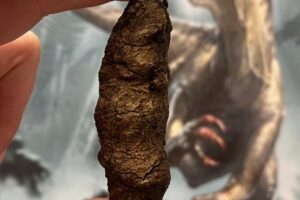
Fossil faeces of the bone-crushing archosaur Smok, with a Smok reconstruction in the background. Illustration: Grzegorz Niedźwiedzki

Ancient Dung Reveals How Dinosaurs Rose to Power Through Five Key Steps

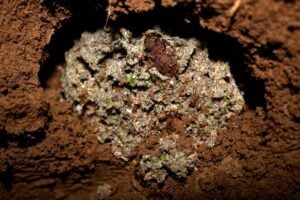
Colony of the species Atta colombica, unearthed in Gamboa, Panama. In the center of the photo, much larger than the workers, is the queen

Asteroid that wiped out the dinosaurs led to the invention of ‘ant agriculture’

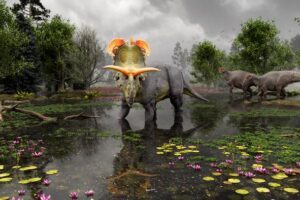
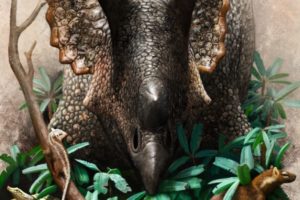
Depiction of Lokiceratops in the 78-million-year-old swamps of northern Montana, with two Probrachylophosaurus passing by in the background.

New Dinosaur with Bizarre Horns Discovered in Montana

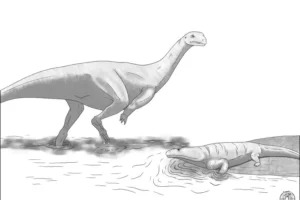
Artist reconstruction of Musankwa sanyatiensis, walking in Triassic shallow waters past a metoposaur.

New Dinosaur Species Discovered on the Shores of Lake Kariba in Zimbabwe

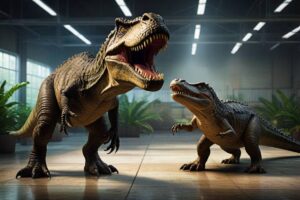
a Tyrannosaurus rex alongside a modern-day crocodile. The T. rex and crocodile are positioned side by side, with their heads at a similar level, emphasizing the comparison of their cognitive abilities.

When it Comes to Smarts, Dinosaurs Were More Like Crocodiles Than Monkeys

Part of the Nanushk formation

Alaska dinosaur tracks reveal a lush, wet environment

Valleys

More than a meteorite: The new clues about the demise of dinosaurs

Bite and tooth marks on sauropod dinosaurs from the Morrison Formation

Surprising insights into feeding habits of carnivorous dinosaurs in North America

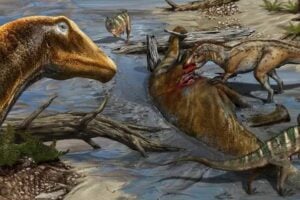
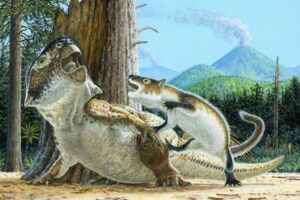
Illustration showing Repenomamus robustus as it attacks Psittacosaurus lujiatunensis moments before a volcanic debris flow buries them both, ca. 125 million years ago.

Unusual fossil shows rare evidence of a mammal attacking a dinosaur

Bone cavities called air sacs appeared in the ancestors of long-necked dinosaurs about 225 million years ago, according to the analysis of a specimen found in Rio Grande do Sul state, South Brazil. The study also shows that air sacs did not evolve as linearly as scientists believe (credit: Márcio L. Castro)

Brazilian fossil provides earliest evidence of evolutionary trait that enabled dinosaurs to become giants

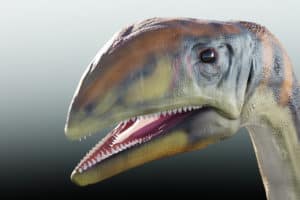
Dinosaur face

First dinosaurs ate pretty much everything

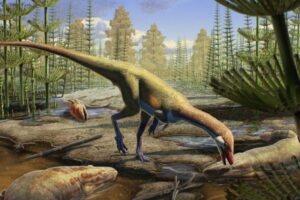
Dinosaur illiustration

Before asteroid, dinosaurs we’re killing it

Substack subscription form sign up

Comments

  • Karoly Mirnics on Common Prescription Drugs May Disrupt Cholesterol Pathways in the Womb and Raise Autism Risk
  • Aizen on Laziness helped lead to extinction of Homo erectus
  • Norwood johnson on Electrons in New Crystals Behave as If They Live in Four Dimensions
  • ScienceBlog.com on Hidden Geometry Could Finally Fix Quantum Computers
  • Theo Prinse on America Is Going Back to the Moon. This Time, It Plans to Stay
© 2026 ScienceBlog.com | Follow our RSS / XML feed