Skip to content
ScienceBlog.com
  • Featured Blogs
    • EU Horizon Blog
    • ESA Tracker
    • Experimental Frontiers
    • Josh Mitteldorf’s Aging Matters
    • Dr. Lu Zhang’s Gondwanaland
    • NeuroEdge
    • NIAAA
    • SciChi
    • The Poetry of Science
    • Wild Science
  • Topics
    • Brain & Behavior
    • Earth, Energy & Environment
    • Health
    • Life & Non-humans
    • Physics & Mathematics
    • Social Sciences
    • Space
    • Technology
  • Our Substack
  • Follow Us!
    • Bluesky
    • Threads
    • FaceBook
    • Google News
    • Twitter/X
  • Contribute/Contact

drug manufacturing

Oxycodone is the generic name for a range of opoid pain killing tablets. Prescription bottle for Oxycodone tablets and pills on glass table with reflections

Indian generic drugs linked to more adverse events than those from U.S.

Heparin, the world’s most widely used blood thinner, is used during procedures ranging from kidney dialysis to open heart surgery.

Scientists’ discovery could reduce dependence on animals for vital anti-blood clot drug

From left: Jemin Jeon, Xiao Su, and Johannes Elbert

A Better Way to Distinguish Left and Right-Handed Molecules

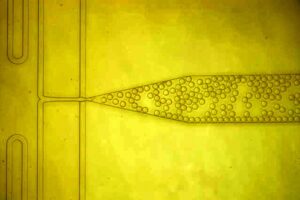
A microfluidic device was designed to combine protein solution with nanoparticles and then form thousands of tiny, identical droplets. Inside each of these droplets, the proteins interact with the nanoparticles, which help them to form protein crystals. Credits:Credit: Courtesy of the researchers, colorized by MIT News

New purification method could make protein drugs cheaper

Substack subscription form sign up

Comments

  • Norwood johnson on Electrons in New Crystals Behave as If They Live in Four Dimensions
  • ScienceBlog.com on Hidden Geometry Could Finally Fix Quantum Computers
  • Theo Prinse on America Is Going Back to the Moon. This Time, It Plans to Stay
  • george w on Hidden Geometry Could Finally Fix Quantum Computers
  • Tom Hughes on Years of Exercise, Blood Pressure Drugs Failed to Slow Cognitive Decline in Seniors at Dementia Risk
© 2026 ScienceBlog.com | Follow our RSS / XML feed