Skip to content
ScienceBlog.com
  • Featured Blogs
    • EU Horizon Blog
    • ESA Tracker
    • Experimental Frontiers
    • Josh Mitteldorf’s Aging Matters
    • Dr. Lu Zhang’s Gondwanaland
    • NeuroEdge
    • NIAAA
    • SciChi
    • The Poetry of Science
    • Wild Science
  • Topics
    • Brain & Behavior
    • Earth, Energy & Environment
    • Health
    • Life & Non-humans
    • Physics & Mathematics
    • Social Sciences
    • Space
    • Technology
  • Our Substack
  • Follow Us!
    • Bluesky
    • Threads
    • FaceBook
    • Google News
    • Twitter/X
  • Contribute/Contact

early diagnosis

UP researchers are making today matter by developing non-invasive techniques to detect brain tumours and make earlier diagnoses, which often lead to better outcomes. Source: Shutterstock.

Eye pressure could help diagnose brain tumors

Asian male model

Simple Blood Test Proves Highly Effective at Detecting Early Alzheimer’s in Asians

mouse

AI System Spots Early Warning Signs of Alzheimer’s Through Mouse Behavior

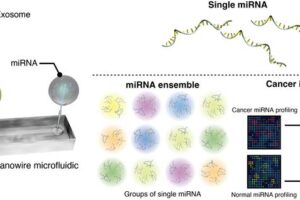
Scientists utilized zinc oxide nanowires to capture cancer-associated miRNAs in urinary extracellular vesicles. By integrating machine learning analysis, they identified specific miRNA ensembles that differentiate lung cancer patients from healthy individuals, showing promise as a non-invasive, early-stage cancer detection tool. This pioneering approach could transform cancer diagnosis, enhancing patient outcomes through earlier intervention.

New Nanowire Technology Detects Early-Stage Cancer Through Urine Test

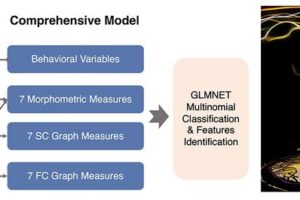
Illustration of the steps of the model construction for early diagnosis of bipolar disorder in adolescents (Left) and the conceptual graphs to show the importance of the advanced brain imaging techniques for bipolar disorder (right).

Researchers achieve a significant advancement in early diagnosis of bipolar disorder in adolescents

Kristiina Tammimies

AI Model Shows Promise in Early Autism Detection, Achieving 80% Accuracy

Blood vials

AI-Powered Blood Test Predicts Parkinson’s Disease Years Before Symptoms Appear

Two values from a blood sample – that's all it takes to detect the onset of diabetes. © RUB, Marquard

Simple and Reliable Early Prediction of Diabetes

Women on a hammock looking at a pond

Sugar molecule in blood can predict Alzheimer’s disease

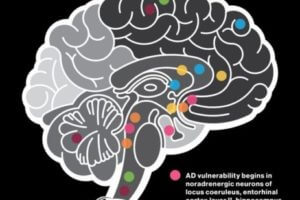
The illustration shows the cell types and brain regions affected by six different neurodegenerative diseases: Friedreich's ataxia (purple); Huntington's disease (blue); frontotemporal dementia (yellow); amyotrophic lateral sclerosis (ALS), also known as motor neuron disease (MND) or Lou Gehrig's disease (green); Parkinson's disease (orange); and Alzheimer's disease (pink).

Common features among neurodegenerative diseases, opening door to early diagnosis and treatment

Substack subscription form sign up

Comments

  • Karoly Mirnics on Common Prescription Drugs May Disrupt Cholesterol Pathways in the Womb and Raise Autism Risk
  • Aizen on Laziness helped lead to extinction of Homo erectus
  • Norwood johnson on Electrons in New Crystals Behave as If They Live in Four Dimensions
  • ScienceBlog.com on Hidden Geometry Could Finally Fix Quantum Computers
  • Theo Prinse on America Is Going Back to the Moon. This Time, It Plans to Stay
© 2026 ScienceBlog.com | Follow our RSS / XML feed