Skip to content
ScienceBlog.com
  • Featured Blogs
    • EU Horizon Blog
    • ESA Tracker
    • Experimental Frontiers
    • Josh Mitteldorf’s Aging Matters
    • Dr. Lu Zhang’s Gondwanaland
    • NeuroEdge
    • NIAAA
    • SciChi
    • The Poetry of Science
    • Wild Science
  • Topics
    • Brain & Behavior
    • Earth, Energy & Environment
    • Health
    • Life & Non-humans
    • Physics & Mathematics
    • Social Sciences
    • Space
    • Technology
  • Our Substack
  • Follow Us!
    • Bluesky
    • Threads
    • FaceBook
    • Google News
    • Twitter/X
  • Contribute/Contact

ecological research

Cone snail toxin (Conkunitzin-S1, shown in orange) interacting with a fish potassium channel (shown in blue). Courtesy of Eitan Reuveny and Izhar Karbat.

Cone snail toxin inspires new method for studying molecular interactions

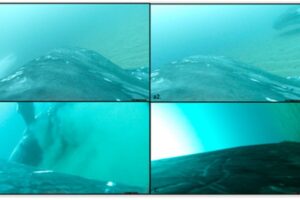
Bottom contact behaviour documented with CATS camera. Screen shots showing an accompanying whale on its back during sand rolling (a1) and an accompanying whale moving its pectoral fin over the substrate from tag a (a2). Sand rolling performed by an accompanying whale during deployment of tag (b) and the tagged individual using its pectoral fin before rolling on its back from tag (c)

Whales stop by Gold Coast bay for day spa fix with full body scrubs

Sailfish

Watch the fastest fish in the world hunt its prey – for the first time

A selection from the zooplankton collection at the NTNU University Museum. The collection is safely stored in anticipation of future researchers, who may find it useful.

Just one degree can change a species
Substack subscription form sign up

Comments

  • Norwood johnson on Electrons in New Crystals Behave as If They Live in Four Dimensions
  • ScienceBlog.com on Hidden Geometry Could Finally Fix Quantum Computers
  • Theo Prinse on America Is Going Back to the Moon. This Time, It Plans to Stay
  • george w on Hidden Geometry Could Finally Fix Quantum Computers
  • Tom Hughes on Years of Exercise, Blood Pressure Drugs Failed to Slow Cognitive Decline in Seniors at Dementia Risk
© 2026 ScienceBlog.com | Follow our RSS / XML feed