Skip to content
ScienceBlog.com
  • Featured Blogs
    • EU Horizon Blog
    • ESA Tracker
    • Experimental Frontiers
    • Josh Mitteldorf’s Aging Matters
    • Dr. Lu Zhang’s Gondwanaland
    • NeuroEdge
    • NIAAA
    • SciChi
    • The Poetry of Science
    • Wild Science
  • Topics
    • Brain & Behavior
    • Earth, Energy & Environment
    • Health
    • Life & Non-humans
    • Physics & Mathematics
    • Social Sciences
    • Space
    • Technology
  • Our Substack
  • Follow Us!
    • Bluesky
    • Threads
    • FaceBook
    • Google News
    • Twitter/X
  • Contribute/Contact

ecosystem sustainability

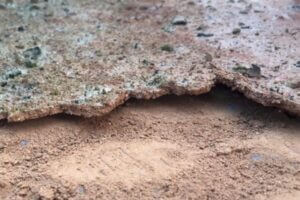
Biocrusts are complex ecosystems researchers have only recently begun to explore. Among their many housekeeping functions, they act to stabilize soil by binding soil particles together, minimizing the loss of topsoil caused by wind and water. They contribute to nutrient cycling by fixing atmospheric nitrogen, a process where nitrogen gas is converted into ammonia, making it available to plants. Cyanobacteria, which are present in biocrusts, are the primary organisms responsible for this process.

Using solar farms to generate fresh desert soil crust

Substack subscription form sign up

Comments

  • Karoly Mirnics on Common Prescription Drugs May Disrupt Cholesterol Pathways in the Womb and Raise Autism Risk
  • Aizen on Laziness helped lead to extinction of Homo erectus
  • Norwood johnson on Electrons in New Crystals Behave as If They Live in Four Dimensions
  • ScienceBlog.com on Hidden Geometry Could Finally Fix Quantum Computers
  • Theo Prinse on America Is Going Back to the Moon. This Time, It Plans to Stay
© 2026 ScienceBlog.com | Follow our RSS / XML feed