Skip to content
ScienceBlog.com
  • Featured Blogs
    • EU Horizon Blog
    • ESA Tracker
    • Experimental Frontiers
    • Josh Mitteldorf’s Aging Matters
    • Dr. Lu Zhang’s Gondwanaland
    • NeuroEdge
    • NIAAA
    • SciChi
    • The Poetry of Science
    • Wild Science
  • Topics
    • Brain & Behavior
    • Earth, Energy & Environment
    • Health
    • Life & Non-humans
    • Physics & Mathematics
    • Social Sciences
    • Space
    • Technology
  • Our Substack
  • Follow Us!
    • Bluesky
    • Threads
    • FaceBook
    • Google News
    • Twitter/X
  • Contribute/Contact

electric vehicles

An abandoned road and brine transitional pool at the margin of the Salar de Atacama Halite Nucleus.

Industry vastly overestimating the amount of fresh water available for lithium mining

A car emitting radar signals

Electric Cars Now Outlast Gas Vehicles, Landmark Study Shows

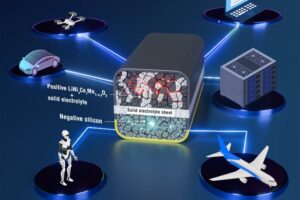
Researchers from Doshisha University in Japan have developed an innovative quasi-solid-state lithium-ion battery (LIB) that incorporates both non-flammable solid and liquid electrolytes. This advanced design offers enhanced ionic conductivity, improved cycling performance, and greater safety compared to traditional lithium-ion batteries.

Novel Battery Design Could Make Electric Vehicles Safer, More Reliable

Lero researchers Dr Barry Sheehan, Kevin McDonnell and Professor Finbarr Murphy, University of Limerick, Ireland following the publication of 'Are electric vehicles riskier? A comparative study of driving behaviour and insurance claims for internal combustion engine, hybrid and electric vehicles' in Accident Analysis & Prevention. Photo by Brian Arthur.

Drivers of electric vehicles are more likely to be at fault: Study

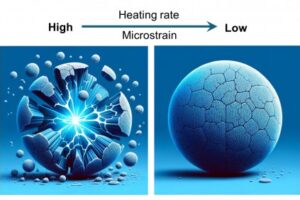
Artistic rendering illustrating the key finding that lowering the heat-up rate during cathode preparation for sodium-ion batteries eliminated the strain and cracking problem in core-shell particles with a concentration gradient.

Researchers Crack a Key Problem with Sodium-Ion Batteries for Electric Vehicles

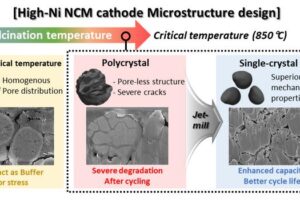
A schematic of the microstructure evolution of high-nickel cathode materials with synthesis temperature, and a strategy for synthesizing single crystals at a critical temperature.

Million-Mile EV Batteries? New Crystal Tech Could Make It Possible

junk yard with scrapped autos

Early retirement of old vehicles won’t save the planet

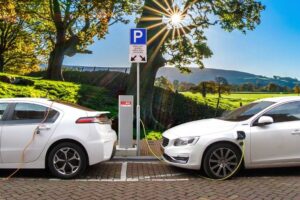
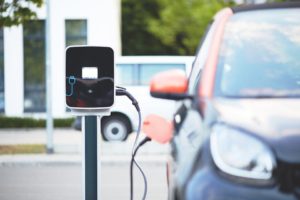
Electric vehicles at charging station

Electric vehicles are measurably lowering Bay Area’s carbon emissions

Electric cars dangle the promise of earning money for their drivers

Map of percentage change in transportation energy burden from current on-road vehicle stock to a new battery-electric vehicle. Negative percentages indicate energy cost savings for EVs compared to gasoline powered vehicles. Areas with the greatest savings, shown in green, include the West Coast states and parts of the East and South. Transportation energy burden is the percentage of household income spent on fueling with gasoline or charging with electricity. Adapted from Vega-Perkins et al. in Environmental Research Letters, January 2023.

EV transition will benefit most US vehicle owners, but lowest-income Americans could get left behind

Ohio State logo

How a test drive may lead to an electric vehicle purchase

Electric vehicle at charging station

Electric car sales should make cities cleaner and healthier

Substack subscription form sign up

Comments

  • Kidreadytobreed on Global warming reduces available wind energy
  • James on Global warming reduces available wind energy
  • James on Global warming reduces available wind energy
  • Booklet AI on Key to online education: Test early and often
  • Karoly Mirnics on Common Prescription Drugs May Disrupt Cholesterol Pathways in the Womb and Raise Autism Risk
© 2026 ScienceBlog.com | Follow our RSS / XML feed